
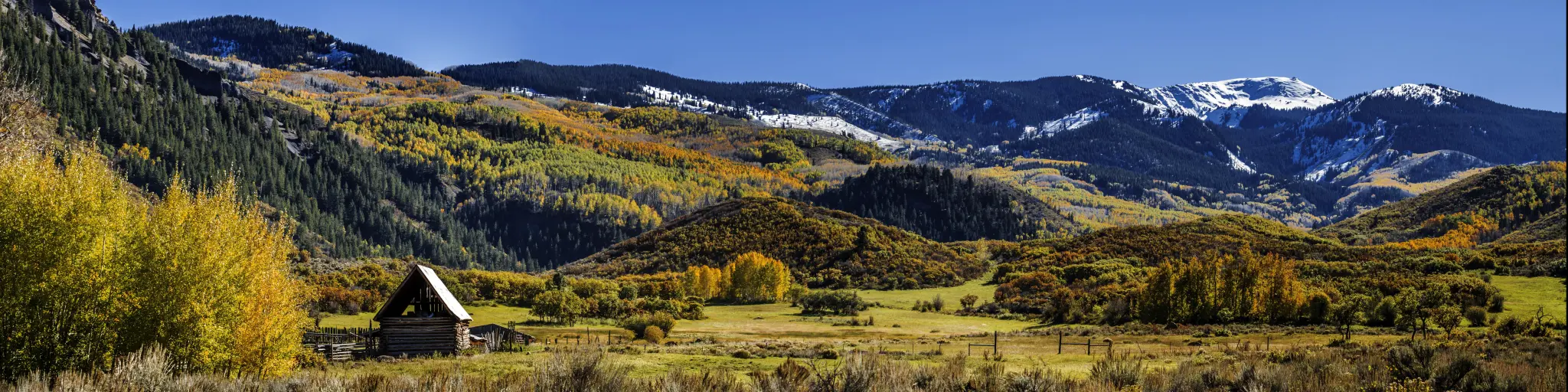
Road Trip from Denver to Aspen

Aspen is about 3.5 hours from Denver via I-70 and Glenwood Springs - the fastest route and the only option in winter. From late May to October, Independence Pass opens up and gives you two scenic alternatives crossing over the Continental Divide at 12,095 feet.
These routes take a little longer, but the drive over the pass is one of the best mountain roads in Colorado and it's a bit more interesting than sitting on the interstate.
🚙 EXPLORE MORE: The Best Road Trips From Denver
Read this before you leave Denver
🏔️ Independence Pass is Closed in Winter
Independence Pass on Highway 82 closes every year from early November to late May. The exact dates depend on snowfall but don't expect it to be open before Memorial Day.
If you're going to Aspen in the winter, your only route is via I-70 west to Glenwood Springs and then Highway 82 south to Aspen, avoiding the pass. This is 40 miles further than going over the pass, but takes roughly the same amount of time because you're driving the interstate instead of narrow mountain roads.
❄️ Winter Driving on I-70
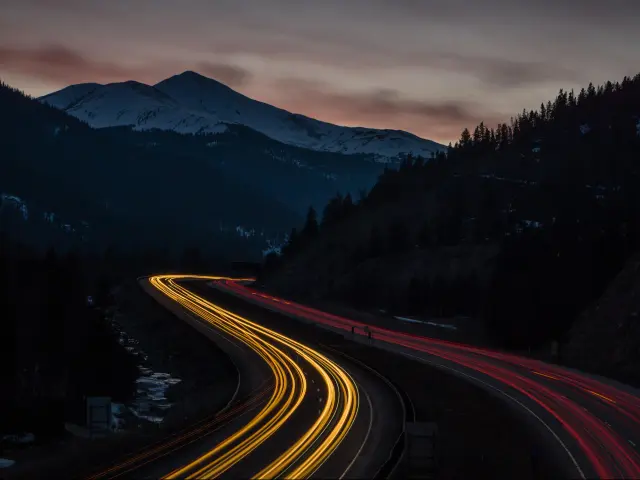
If you're driving to Aspen in ski season, you're taking I-70 through the Eisenhower Tunnel and over Vail Pass - this stretch backs up every Friday afternoon and Saturday morning with ski traffic. Avoid the rush if you can or you can easily lose 2 hours sitting in traffic.
Chain laws and traction requirements are regularly in effect from October through April. Check road conditions before you leave.
💰 Aspen Prices
Aspen is expensive. Hotels in ski season run $1,000+ a night and restaurants price accordingly. If you're visiting in winter, book as far ahead as you can - the good hotels sell out months in advance. Summer is significantly cheaper and the town is quieter, but it's all relative - it's still Aspen. Budget accordingly.
How many days do you need?
4 days is perfect for a long weekend. The drive is 3.5-4 hours each way so you get 2 full days in Aspen and some usable time on the driving days too.
If you're coming to ski, you might want to spend longer depending on how far your schedule and wallet stretches. The structure of the trip is the same - you just get more time on the slopes.
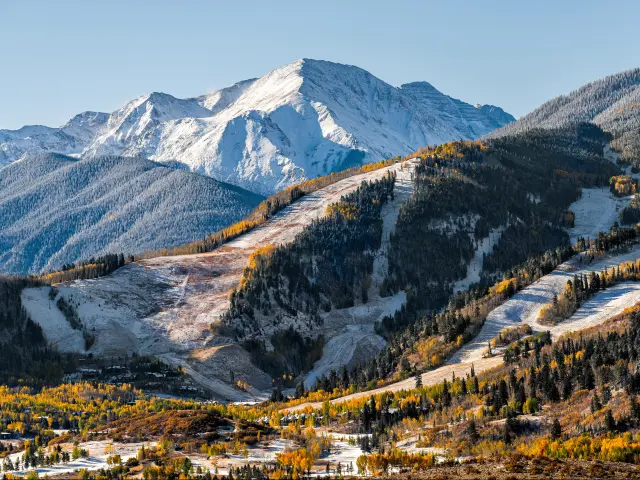
Day 1: Drive to Aspen
🚗 200 miles ⏱️ 3 hours, 30 minutes
Leave Denver in the morning - you'll be in Aspen in time for lunch. Walk around town, and if you're here to ski, get your rental gear sorted, and check into your hotel. If you're ambitious, you might be able to grab a couple of hours on the slopes at the end of the day.
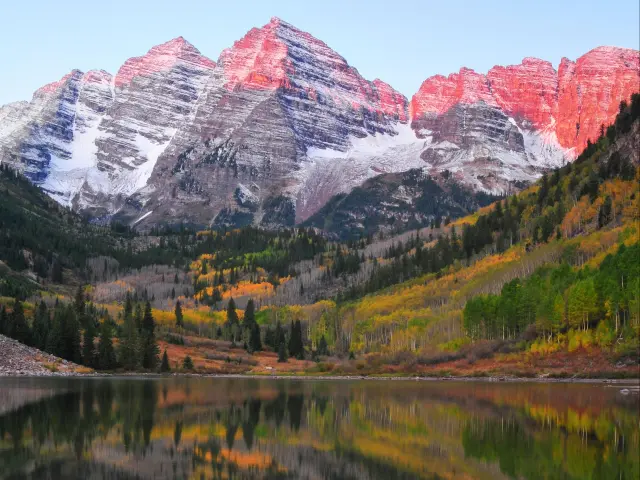
Day 2: On the Mountain
Your first full day. In winter, hit the slopes - Aspen Mountain is right in town and Aspen Highlands, Buttermilk, and Snowmass are all within 15 minutes. In summer, hike to the Maroon Bells, the most photographed peaks in Colorado.
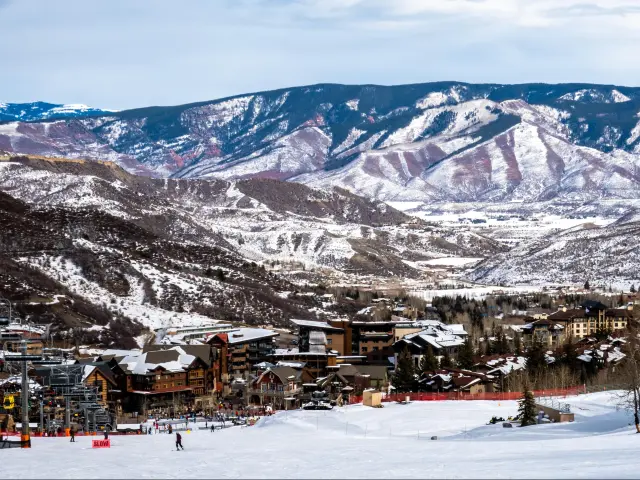
Day 3: More Mountain time
A second full day. Go back to the mountains - that's what this whole trip is all about! Try one of the other ski areas for variety in the winter or head to the other side of the valley and hike the Hunter Creek Trail through forests in the summer.
Day 4: Drive Home
🚗 200 miles ⏱️ 3 hours, 30 minutes
The morning is yours to spend in town or one last trip up the mountain. Later on it's time to pack up and head back to Denver. In the summer, you can reroute via Buena Vista and Bailey for a different way back.
Where to stay in Aspen
The Little Nell is the best hotel in Aspen - ski-in/ski-out at the base of the gondola, modern rooms, and none of the dated mountain-lodge decor you'll find at most Aspen hotels. It's expensive, but this is Aspen - everything is expensive. At least here you're paying for something that's genuinely worth it.
The hotel is right at the base of Aspen Mountain, so in winter you can ski to the front door. In summer, the gondola runs for hikers and sightseers and the terrace restaurant has views up the valley. It's walking distance to everything in town.
Book as early as you can if you're visiting in ski season. The Little Nell sells out months ahead and last-minute availability in peak winter is rare.
The route from Denver
You can customize your trip to Aspen in the Planner.
For skiers: Winter Route
For hikers: Summer Route
In winter
There's only one route option: I-70 west to Glenwood Springs, then Highway 82 south along the Roaring Fork Valley to Aspen. Independence Pass is closed, so this is it.
The first half is the same I-70 mountain corridor as any other westbound trip from Denver - Eisenhower Tunnel, Vail Pass, Glenwood Canyon. If you haven't driven I-70 before, Glenwood Canyon is where the road goes from picturesque to spectacular - 12 miles of interstate threaded through a narrow gorge with the Colorado River below you.
At Glenwood Springs, leave I-70 and take Highway 82 south. The road follows the Roaring Fork Valley through Carbondale and Basalt before climbing into Aspen. The whole drive is about 3.5 hours without traffic.
"Without traffic" is a pretty big caveat. On Friday afternoons and Saturday mornings in ski season, I-70 backs up at the Eisenhower Tunnel. Highway 82 into Aspen can stack up too, especially on powder days. Leave Denver early on Friday and avoid Saturday mornings or be ready to wait.
In summer
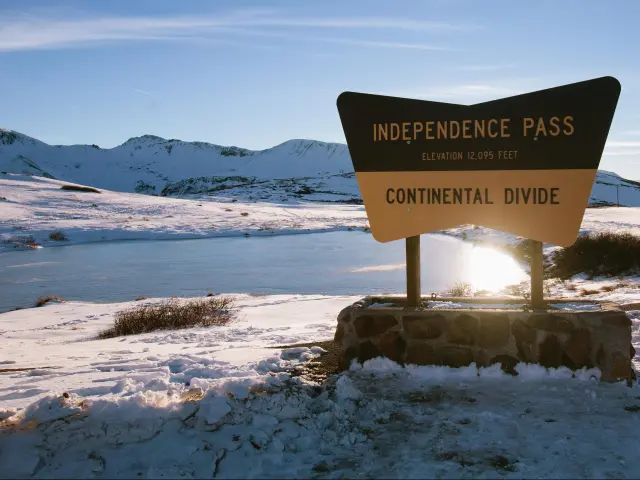
Independence Pass opens up two routes that go over the Continental Divide at 12,095 feet. Both merge at Twin Lakes for the final climb over the pass.
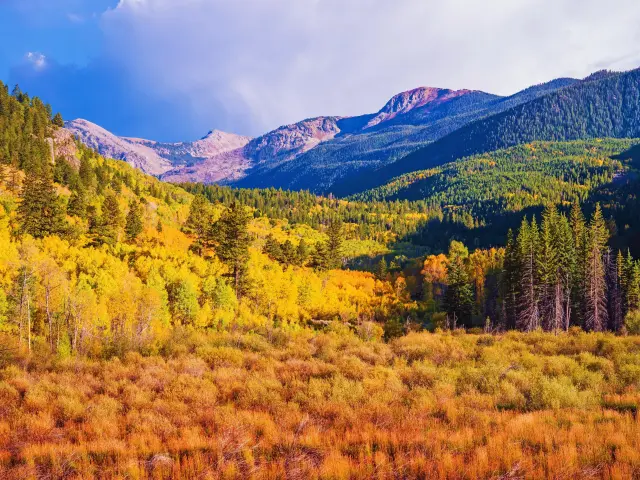
Route 91 through Leadville is the most direct. Take I-70 west to Copper Mountain, exit onto Route 91 south, and drop into Leadville - the highest incorporated city in America at 10,152 feet. From Leadville, take US-24 south to Twin Lakes, then Highway 82 over Independence Pass into Aspen. About 3.5 hours total.
The Buena Vista route takes US-285 south out of Denver through Bailey, over Kenosha Pass, through Fairplay, and down to Buena Vista before heading west to Twin Lakes. It's about 30 minutes longer but a completely different landscape - open valleys, wide mountain views, and none of the I-70 interstate driving. If you've never driven through South Park - yes, the real one, Fairplay is the town that inspired the show - it's worth the extra time.
You can still drive the winter route via I-70 - it's simpler and the fastest way to Aspen, but you're skipping Independence Pass, which is the best part of the whole drive. Take one of these routes on the way there and the other back. You'll see different scenery in both directions and you won't retrace your steps.
Independence Pass
The final 32 miles from Twin Lakes to Aspen are shared by both summer routes. The road climbs above the treeline, winds through tight switchbacks with minimal guardrails, and tops out at 12,095 feet on the Continental Divide. It's narrow, steep, and not for nervous drivers, but the views are extraordinary.
Stop at the summit for the panoramic overlook and a chance to catch your breath. No vehicles over 35 feet are allowed on the pass.
Aspen
Aspen is a different place in winter and summer - the way you explore the mountains depends on the season.
The skiing
Aspen has four ski areas and each one has a different personality. Aspen Mountain (locals call it Ajax) is right in town. You can walk from your hotel to the gondola. It's steep, there are no beginner runs, and the terrain is best suited to intermediate and advanced skiers who want a challenge.
Snowmass is 15 minutes down the valley and is the biggest of the four ski areas. It has the most terrain, the most variety, and the best mix of runs for all abilities. If you're skiing with a group that has different skill levels, this is the place to go.
Buttermilk is the beginner mountain - wide, gentle runs and the home of the X Games. If you're learning or bringing kids, start here.
Aspen Highlands is the exact opposite - steep, challenging, and less crowded than Ajax. The Highland Bowl hike will get your heart pumping, but it gets you some of the best expert terrain in Colorado.
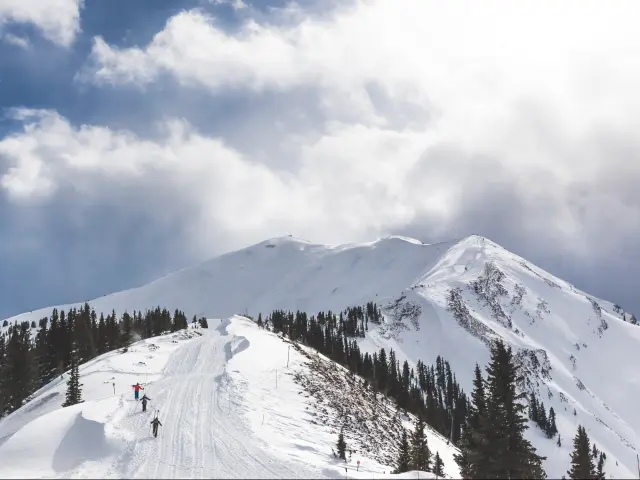
All four areas are covered by one lift ticket and connected by a free shuttle, so you can easily ski a different mountain each day and it's much more convenient than packing ski gear in your car and parking.
Maroon Bells
Once Independence Pass opens in late May, the Maroon Bells become accessible - two 14,000-foot peaks rising above Maroon Lake that are apparently the most photographed mountains in North America.
The reflection of the peaks in the lake on a still morning is the image you've seen on every Colorado postcard.
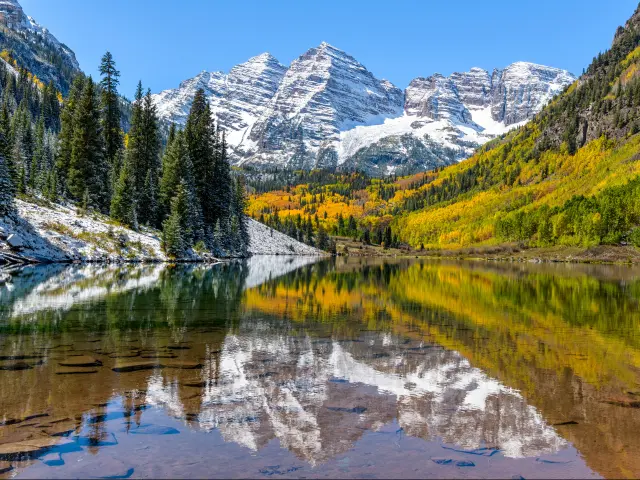
Between 8am and 5pm from late May to mid-October, the road to the trail is closed to private vehicles and you have to take a shuttle from Aspen Highlands. Tickets are not cheap at $16 per adult, but they still sell out in peak season - book through visitmaroonbells.com as early as you can.
If you want to drive yourself, you can arrive before 8am or after 5pm with a $10 parking reservation.
The scenic loop around Maroon Lake is about 1.5 miles, flat, and easy - you can see the famous view and be back at the shuttle stop in under an hour. For a longer hike, the Crater Lake trail continues up the valley for about 3.5 miles each way into the wilderness below the peaks.
Mid-week visits are significantly quieter than weekends. If you want to avoid 200 people lining up for a selfie on the lake, don't come mid-morning on a Saturday.
The town
Year-round, Aspen itself is worth a few hours. Galena Street is the main street - restaurants, galleries, and shops packed into a few walkable blocks. It's upscale without being stuffy, and the food is genuinely good, although you're going to pay a premium for the location.
Take the Silver Queen Gondola up Aspen Mountain for panoramic views of the Elk Mountains and the valley below - it runs for skiers in winter and sightseers in summer. The ride takes about 15 minutes and the views from the top are worth the ticket.
If you have a spare afternoon, you can drive south out of Aspen to Ashcroft Ghost Town - a well-preserved silver mining settlement from the 1880s sitting in a quiet valley below the peaks. It's about 20 minutes from Aspen and rarely crowded.
If you want more options for trips in the Rockies, check out my Denver road trip guide - including trips to Durango, Telluride, or further afield to Yellowstone.
Sasha Yanshin – Founder & Lead Driver
Sasha Yanshin has spent the last 15+ years mapping and driving thousands of miles across Europe and the US. As the Founder and Lead Driver of Lazytrips, he brings an analytical approach to road-tripping, sharing meticulously tested routes, realistic drive times, and the hard-earned logistical reality of the open road.
Read full bio