
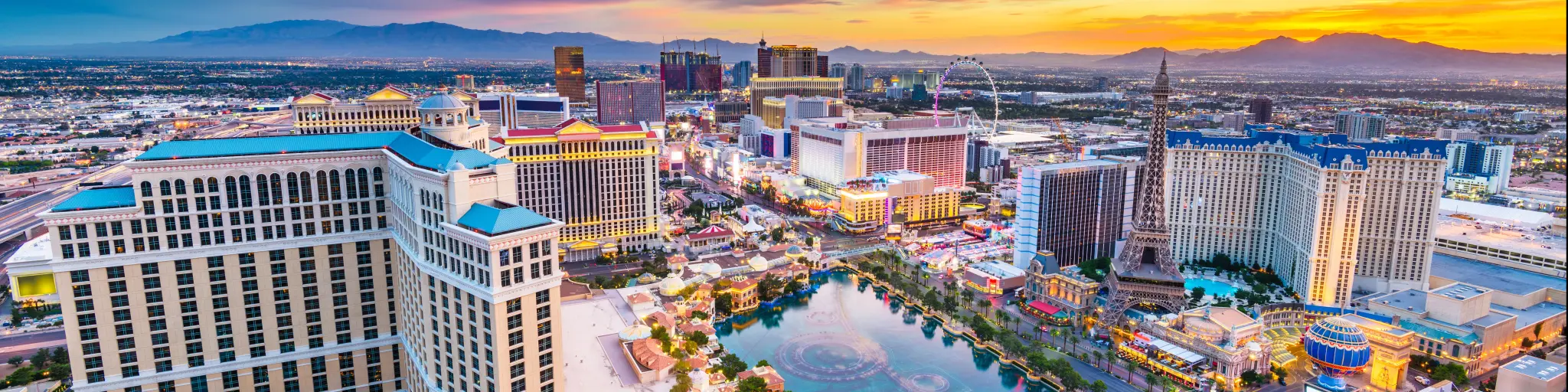
Road Trip From Denver To Las Vegas

If you want to be at the blackjack table by Friday night, you should fly. But if you've got a few days, the drive from Denver to Las Vegas crosses the Rockies at 11,000 feet, drops into Utah's red rock desert, and passes within an hour of Arches, Canyonlands, Zion, and Bryce Canyon before arriving on the Strip.
The route is 750 miles and about 11 hours of driving.
🚙 EXPLORE MORE: The Best Road Trips From Denver
Read this before you leave Denver
🚗 The I-70 Weekend Trap
I-70 west out of Denver funnels every skier, camper, and road tripper through the Eisenhower Tunnel at 11,158 feet. On Friday afternoons and Saturday mornings, the traffic backs up for miles before the tunnel and you can lose 2-3 hours before you've even reached Vail. Leave by noon on a Friday or by 7am on a Saturday if you don't want to spend 2 hours sniffing fumes.
⛽ The Utah Gas Desert
Gas can become a problem after you pass Grand Junction. The 60-mile stretch from Fruita and then the 100-mile stretch from Green River in Utah through the San Rafael Swell have no gas stations, few exits, and spotty cell service. Make sure your tank is full before you get into the desert. This isn't the kind of empty where the choice is limited - there's nothing out there.
How many days do you need?
It depends on why you're driving.

The 1-Day Speedrun
🚗 750 miles ⏱️ 11 hours
You just need to get there. Leave Denver before 6am, stop for coffee and fuel in Grand Junction around the 4-hour mark, fill up again in Green River, and push straight through Utah on I-70 and I-15. You'll get to Vegas by the evening and even if you're late, it doesn't matter - it's Vegas.
The 2-Day Split
🚗 750 miles ⏱️ 11 hours
Split the drive with one overnight stop. Richfield in Utah is right off I-15 and about two thirds of the way there - you've got good cheap motels and no detours needed. Drive 7 hours the first day, sleep, grab a big breakfast, and finish the remaining 4 hours the next day. You arrive in Vegas fresh just in time for check in.
The 6-Day Road Trip
Make the drive the main event. Stop in Moab for Arches and Canyonlands, cut through to Zion National Park, and arrive in Vegas having seen some of the best landscape in America. This is the version worth taking if you have the time - I cover the stops and detours in detail below.
The route from Denver
If you want to plan your stops or customize the drive, you can build your own version of the route in the Planner
The drive splits neatly into three stretches that look and feel completely different from each other.
Denver to Grand Junction
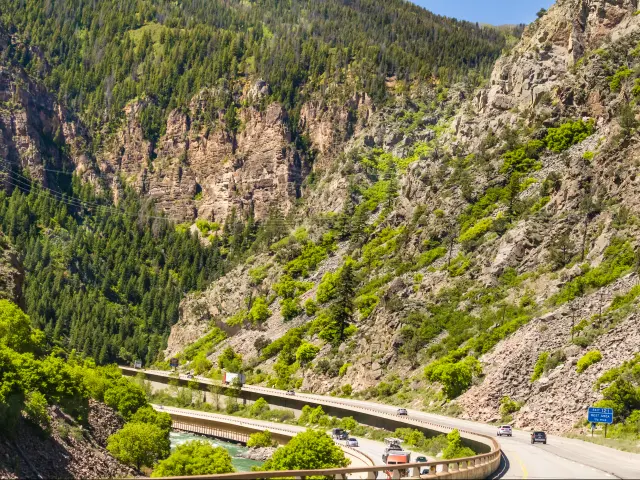
The first 250 miles are the mountain stretch. You climb out of Denver on I-70, cross the Continental Divide through the Eisenhower Tunnel at 11,158 feet, and drop through Vail and the Eagle River valley into Glenwood Canyon.
Glenwood Canyon is the highlight of this section - 12 miles of interstate threaded through a narrow gorge with 1,300-foot walls on both sides and the Colorado River below you. It doesn't feel like a highway. There are pull-offs built into the canyon walls and they're worth using, especially if you're not planning to stop again until Utah.
After Glenwood Springs, the mountains flatten out and the air gets drier. By Grand Junction you're in high desert and the Rockies are behind you. This is your last proper town for a while - fuel up, grab food, and top off anything you need.
Grand Junction to I-15
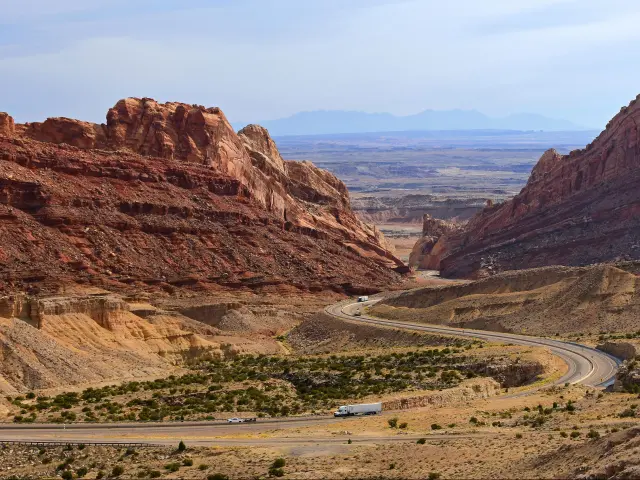
This is the stretch most people aren't ready for. Once you cross into Utah, the landscape opens up into vast empty desert and stays that way for 250 miles. The road is straight, the exits are rare, and cell service drops in and out.
The San Rafael Swell stretches out on both sides - red rock mesas, wide desert sky, and almost no sign of anyone else. It's beautiful in a way that takes a minute to appreciate if you're used to mountain scenery.
At Salina, I-70 ends and you pick up US-50 briefly before joining I-15 south. This is where the drive starts to feel like you're making progress again - you've crossed the empty middle and the terrain starts changing.
I-15 South to Las Vegas
The final 300 miles are the fastest and the most varied. You drop south through Cedar City and St. George in Utah's southwestern corner - both are good fuel and food stops if you need them.
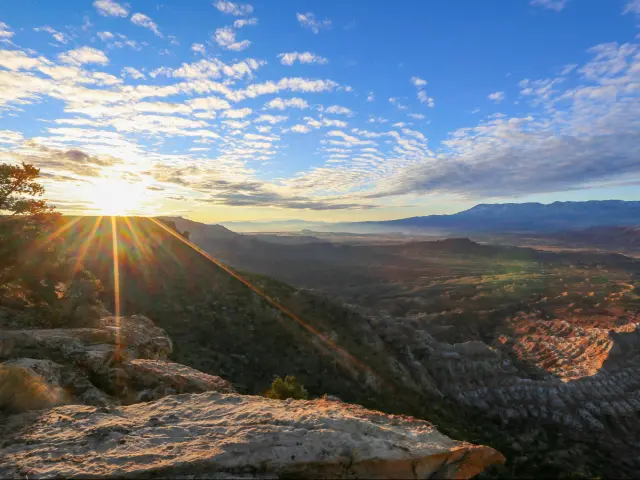
South of St. George, the interstate crosses briefly into Arizona through the Virgin River Gorge - a 15-mile stretch where the road drops into a twisting canyon of sheer rock walls. It's the most dramatic piece of highway on the entire drive and it comes right when you're not expecting it. Watch your speed through here - it's a well-known spot for enforcement.
After the gorge, you climb out into the Mojave Desert and the landscape goes flat and dry for the final 80 miles into Nevada. It's not the most exciting stretch after everything you've just driven through, but it doesn't last long.
The Strip appears on the horizon about 20 minutes before you reach it - and after a full day behind the wheel, seeing it light up in the distance looks like an oasis rising out of the desert.
Stops along the way
If you're taking time on your way down to Vegas, these are the stops that make the drive worth taking. If you're getting to Vegas quickly, bookmark them fop next time.
Moab
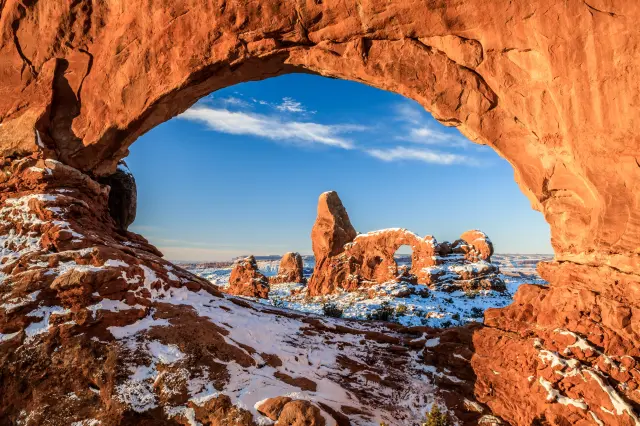
Moab is 30 miles south of I-70 at Crescent Junction - barely a detour in terms of driving, but you'll need at least 2 days here to see Arches and Canyonlands. This is where the red rock desert goes from something you're driving past to something you're standing inside.
I cover the full itinerary, route, and day-by-day plan in my dedicated Denver to Moab guide, so I won't repeat it all here.
If you choose to stop in Moab, Red Cliffs Lodge is the best place to stay - it's right on your way as you drive the scenic Highway 128 and a perfect base to see the parks and relax at night.
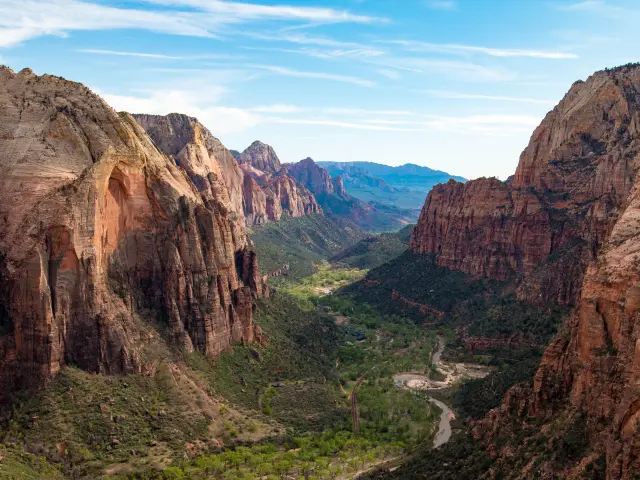
Zion National Park
Zion isn't a detour at all - it's right off I-15. Take the Highway 9 exit near Hurricane and you're in Springdale, the small town at the park entrance, within 30 minutes.
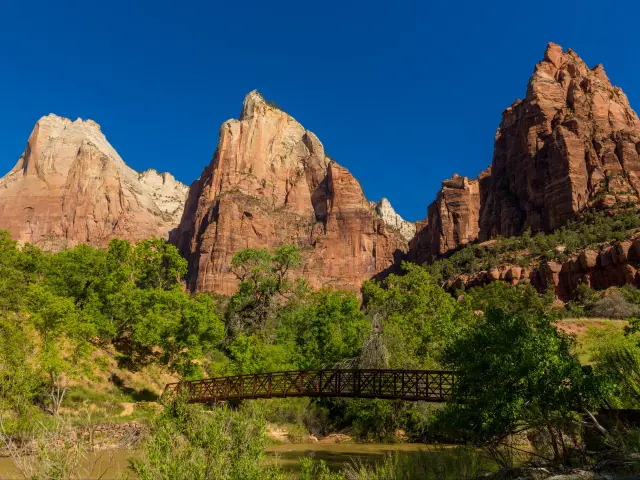
You'll want to spend at least one full day in Zion which means staying 2 nights. The main canyon is accessed by shuttle bus from Springdale - no private cars are allowed on the canyon road from March through November. I cover the full itinerary and hikes in my dedicated Denver to Zion guide.
You don't need to book a year in advance and sell a kidney to stay inside the park. The Cable Mountain Lodge is perfectly located with views of the canyon walls from your room. You're right by the park entrance and the park shuttle which is a big advantage over other hotels in the area.
Bryce Canyon
Bryce Canyon is about 80 miles east of I-15 from Cedar City - a detour of roughly 90 minutes each way. It's the most out-of-the-way stop on this route, but if you haven't seen it before, the hoodoos are unlike anything else in the Southwest.
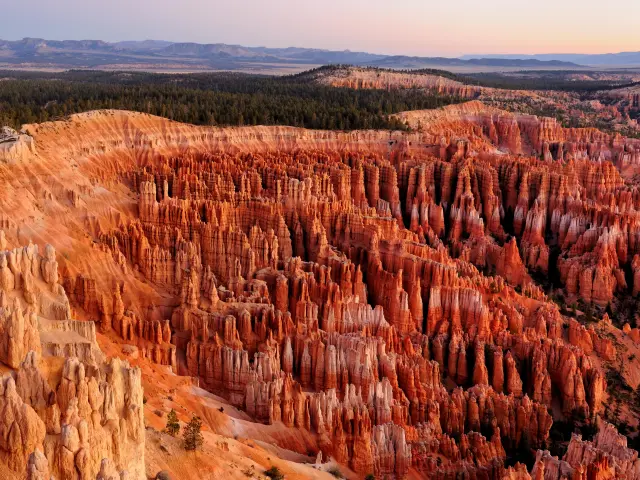
The Navajo Loop and Queen's Garden trails connect into a 3-mile loop that drops you down into the amphitheater among the rock spires. The rim viewpoints are spectacular but walking among the hoodoos is a different experience entirely.
You can see Bryce Canyon in half a day, so it works as a stop between Moab and Zion or if you're taking 2 days to reach Vegas - you don't need to add an overnight stop like you would with Moab or Zion.
Arriving in Las Vegas
After driving through the Rockies and the Utah desert, Las Vegas hits like a different planet. Before you get swept up in it, there are a few things worth knowing as a driver.
Almost every major hotel on the Strip charges for parking. MGM properties and Caesars properties both charge $15-20+ per day for self-parking, and valet is more. This adds up fast over a few nights and it's not included in your room rate.
The Wynn is the best hotel on the Strip, so book it for your Vegas stay. The restaurants on-site are excellent — you don't have to go far to eat well. Its location at the north end of the Strip is perfect — it's quieter than the central corridor and the parking garage is the first major exit off I-15 once you hit the Strip, so you're not navigating Vegas traffic after 11 hours of driving.
If you're driving back to Denver and don't want to take I-70 twice, there are several alternative return routes through the Southwest.
You can loop south through the Grand Canyon and Flagstaff, cut across to Santa Fe and Albuquerque, drive via Page and Monument Valley, or go through Durango and the San Luis Valley.
Every single one of these alternative route options gives you a completely different route back, but adds about 4 hours of driving time. So if you're ok spending 15 to 16 hours on the road, you have a huge choice on the way back.
You can explore all of these options and build your own custom return route in the Planner
If you're still deciding where to go, there's a lot of other road trip ideas in my Denver road trip guide - including shorter drives in the Rockies or trips to Moab and Yellowstone.
Sasha Yanshin – Founder & Lead Driver
Sasha Yanshin has spent the last 15+ years mapping and driving thousands of miles across Europe and the US. As the Founder and Lead Driver of Lazytrips, he brings an analytical approach to road-tripping, sharing meticulously tested routes, realistic drive times, and the hard-earned logistical reality of the open road.
Read full bio