
Road Trip from Denver to Jackson Hole & Grand Teton

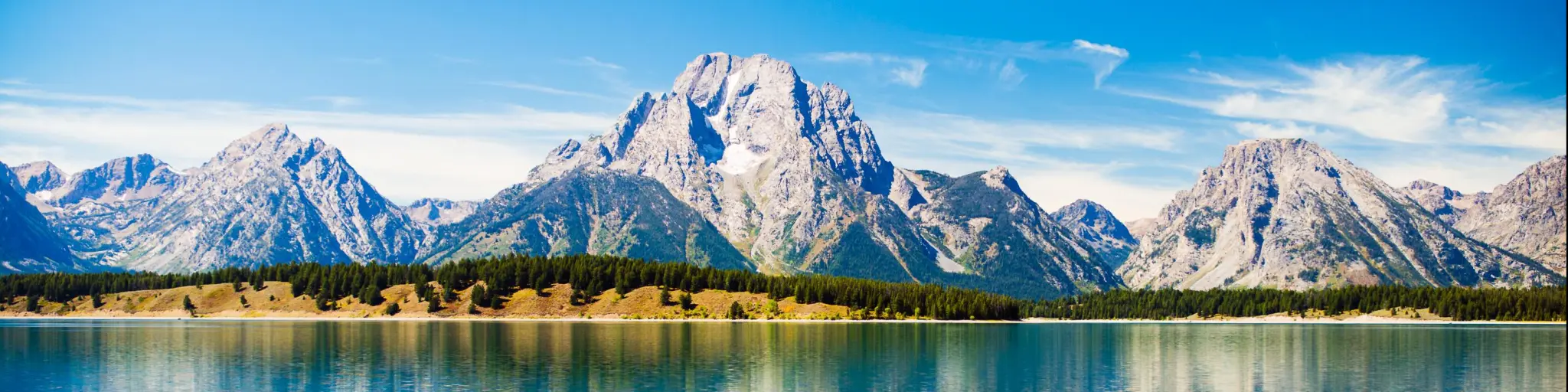
Jackson Hole sits at the foot of the most jaw-dropping mountain range in the country - an 8.5-hour, 510-mile drive from Denver.
Yellowstone may be the more famous neighbor, but the Grand Tetons have arguably the best summer hiking and best winter skiing in the United States.
Grand Teton National Park starts 20 minutes north of town. The mountains here don't build up gradually. The valley floor is flat and the peaks rise 7,000 feet straight up in front of you. Nothing in Colorado looks like this.
Jackson itself is a classic mountain town with excellent restaurants and a walkable center. Give yourself at least three nights to do it properly.
🚙 EXPLORE MORE: The Best Road Trips From Denver
Read this before you leave Denver
💰 The Jackson Price Tag
Jackson is one of the most expensive small towns in America. Hotels regularly run $400-500 a night in summer and even more during ski season. Restaurants, groceries, and fuel are all significantly above what you would pay in Denver. Budget accordingly - this trip costs more per day than almost any other drive from Denver.
🏔️ The Three Jacksons
Jackson is the town. Jackson Hole is the valley. Jackson Hole Mountain Resort is the ski area in Teton Village, 12 miles from town. People use these interchangeably but they're different places. If you're booking accommodation, make sure you know which one you're staying in - Teton Village is good for skiing but isolated from restaurants and nightlife. Jackson town is better for everything else.
📵 The Wyoming Gap
The middle section of the drive from Denver to Jackson passes through long stretches of rural Wyoming with no phone signal and very few towns. Fill up in Rawlins or Lander before long empty stretches of road. Download offline maps before you leave Denver and carry extra water and a portable charger - a breakdown in central Wyoming can be a pretty serious issue if you're not prepared.
How many days do you need?
4 days is the absolute minimum to make the drive worth it. 5 days is the sweet spot if you can get time off work.
Day 1: Denver to Jackson
🚗 510 miles ⏱️ 8 hours, 30 minutes
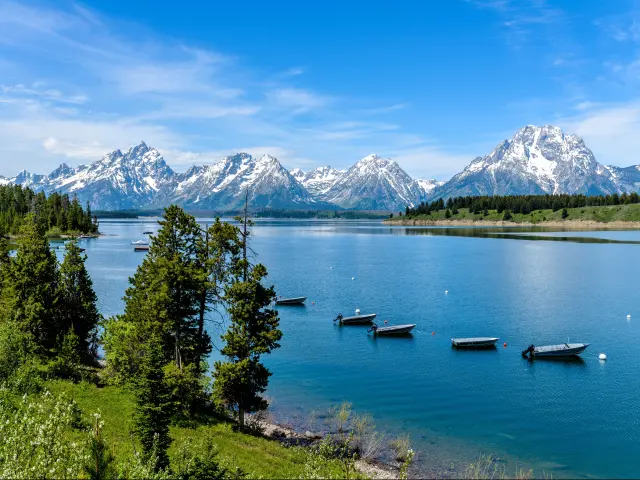
Leave Denver in the morning and drive straight through. It's 8.5 hours with not much worth stopping for, so don't try to break it up.
Check in, walk into town, and find somewhere good for dinner.
Day 2: South Grand Teton
Head into the park at the Granite Canyon Entrance, 20 minutes north of town.
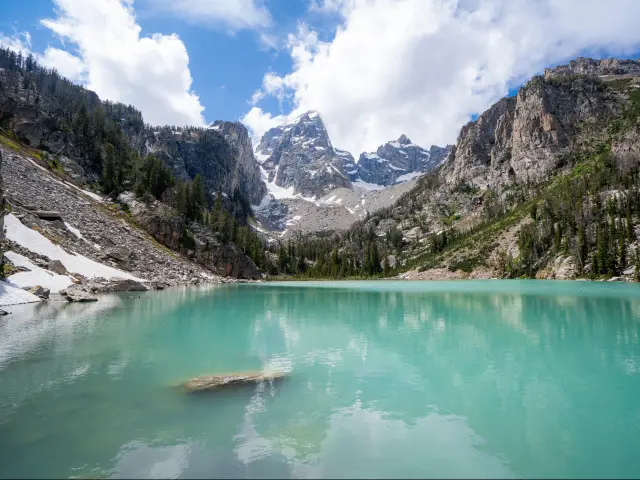
Spend the day hiking from Jenny Lake up into Cascade Canyon - one of the best day hikes in any national park in America.
Day 3: North Grand Teton
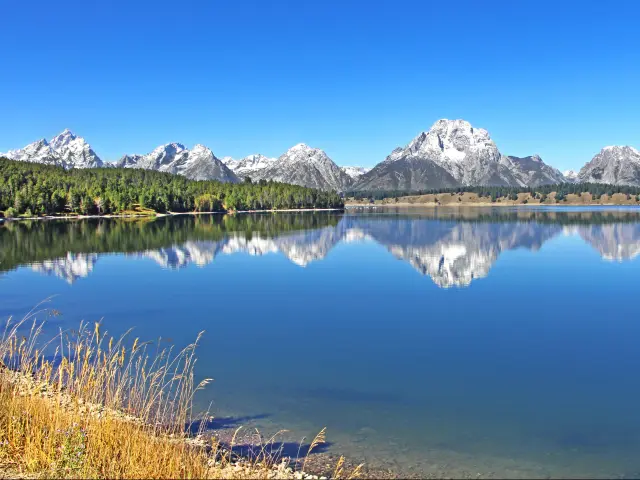
A driving and viewpoints day. Signal Mountain, Oxbow Bend, Jackson Lake, and the Snake River - classic Teton photo stops with a good chance of spotting moose along the way.
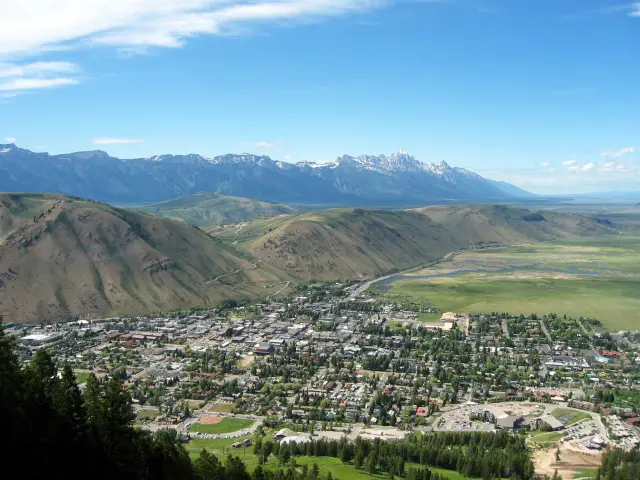
Day 4: Jackson and around
Rest your legs and explore the town. Galleries, the elk antler square, and the best restaurants on the trip.
If you want to get out, Granite Hot Springs or the National Elk Refuge are both close.
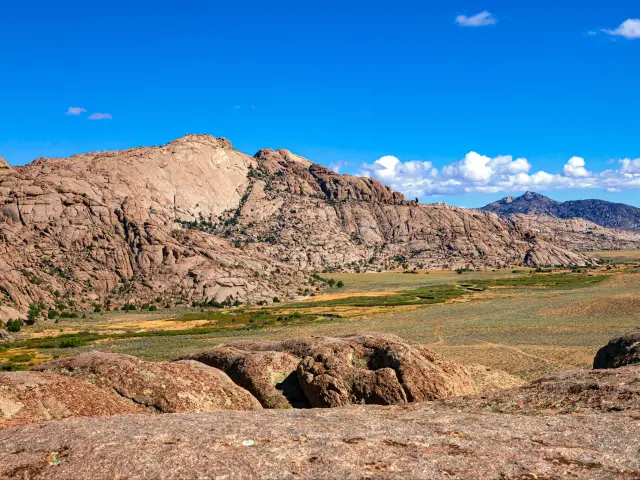
Day 5: Drive back to Denver
🚗 510 miles ⏱️ 8 hours, 30 minutes
Reverse the route south through Lander, Rawlins, and Laramie. Leave early to get home at a reasonable hour.
If you only have a long weekend, this trip doesn't really work. Even leaving Denver straight after work on Thursday, you're not arriving in Jackson until well past midnight, which writes off most of Friday to recovery.
You'd end up with one real day in the Tetons and another full driving day home. The 8.5-hour drive each way needs at least 4 days to be worth doing, and 5 is where it starts to feel like a proper trip rather than a sprint.
If you're coming to ski, 3 ski days is a solid trip - enough to ride both sides of Jackson Hole Mountain Resort properly and spend a day at Snow King or Grand Targhee if you want variety.
Where to stay
Jackson town itself is where you want to be based. It's walkable, restaurants and bars are all within a few blocks of the town square, and the drive to Grand Teton or the ski resort is short enough that staying further out isn't worth the trade-off.
Accommodation in Jackson isn't cheap. Summer rates run $400-500 a night at the good hotels in town and push well above that in peak season or over holidays. Ski season is similarly expensive.
You'll want to book 3-6 months ahead for summer, earlier if you want a specific hotel over Christmas or peak powder weeks.
Hotel Jackson is where I stayed and I really liked it. It's right in the center of town, a two-minute walk from the square and from most of the best restaurants.
The rooms are genuinely nice - not the usual "mountain town hotel" standard where you're paying luxury prices for basic rooms.
The service is attentive, the building has character, and after a long drive or a hard day in the park it's the kind of place that actually feels like a treat rather than just somewhere to sleep. Yes, it is a bit expensive, but for a few nights on a big trip, it's worth it.
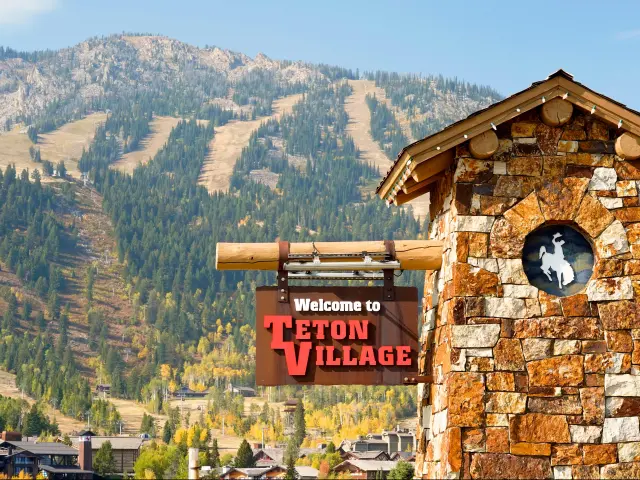
If you're here to ski: Jackson town still makes the most sense as a base. It's only a 15-minute drive to Jackson Hole Mountain Resort, and parking at the base is easy most days. Evenings in town are better than anywhere up at the village. Dinner at a proper restaurant and a short walk or drive back beats eating at a resort every night.
The National Elk Refuge next to Jackson is also worth an hour in winter - the herd is visible from the road and you can take a sleigh ride into the refuge for closer views.
If you genuinely want to ski the first lift every day without needing to drive, Teton Village puts you right at the gondola. It's quieter in the evenings - a few restaurants and bars, but nothing like the scene in town.
The route from Denver
If you want to customize your route through Wyoming or plan each day in detail, you can build your own version of the trip in the Planner.
Here's the recommended route in full.
Head north out of Denver on I-25 to Fort Collins, then take US-287 northwest to Laramie. This first stretch is straightforward - well-maintained highway, and you'll drive past Laramie in about 3 hours.
From Laramie, stay on I-80 west to Rawlins. Fill up here - this is the last reliable town for a while. Google Maps might tell you to keep going on I-80 to Rock Springs, but the better route is north on US-287 through Lander.
The road climbs out of the desert into the foothills of the Wind River Range, and the scenery improves with every mile. Lander is a good place to stop for fuel and food. It's the last place for coffee and snacks before you get to Jackson Hole.
From Lander, continue on US-287 northwest through Dubois and over Togwotee Pass. This is the best section of the whole drive. The road climbs through dense forest, crosses the Continental Divide, and then drops into the Jackson valley with the full Teton Range suddenly filling your windshield. After hours of Wyoming grassland, that first view of the Tetons hits hard.
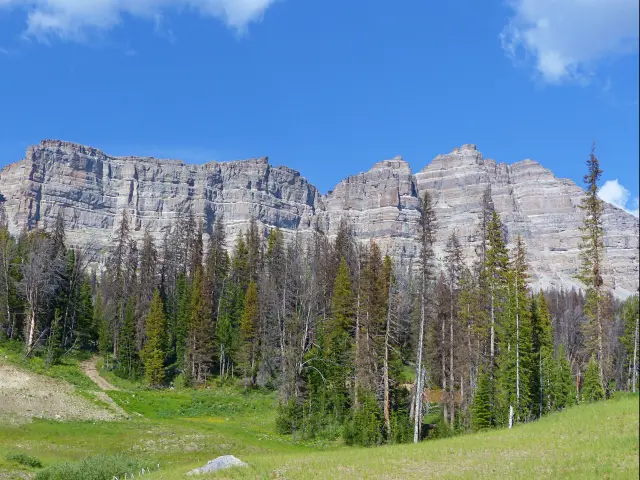
The alternative via Rock Springs
If you prefer, you can stay on I-80 all the way to Rock Springs and cut north from there on US-191. It's pretty much the same total time and distance, but you miss the best scenery - no canyons, no Wind River foothills, and the approach to Jackson doesn't have the same payoff as dropping over Togwotee Pass.
Consider it for the drive back if you want a different route home.
Driving in winter
Both routes are kept open year-round but winter changes the drive. Chain laws kick in on mountain sections and can apply even if you're in a 4WD vehicle. Togwotee Pass sits at 9,658 feet and is the most exposed part of the Lander route - it can close for hours or days during storms.
Check the Wyoming 511 road conditions site before you leave, not just the weather forecast.
After a heavy snowstorm, the Rock Springs route via I-80 is the safer option. I-80 stays open more reliably and clears faster than the mountain pass.
Leave earlier than you would in summer. The drive takes longer when the roads are snowpacked, and you want to be through the mountain sections in daylight.
Pack a proper winter kit - blankets, water, food, a shovel, and a phone charger. Wyoming breakdowns in January are a very different problem to Wyoming breakdowns in July.
Grand Teton and Jackson
Grand Teton gets treated as a warm-up to Yellowstone, but that's a mistake. The park is smaller but the experience is denser - every view is the mountain range from a slightly different angle, and the range itself is extraordinary.
You can see the best of the park in two full days without rushing, which is exactly what the itinerary above is built around.
Just remember most of what's below applies in summer and early fall. Come winter, the park's interior roads close to cars, trails are snowed in, and the Jenny Lake boat shuttle stops running until spring.
Jenny Lake and Cascade Canyon
Jenny Lake is the centerpiece of the south park and where most people start. The short boat shuttle across the lake cuts out a 2-mile flat hike around the perimeter and drops you at the base of the trail up to Hidden Falls and Inspiration Point.
Both are short walks and absolutely worth the time - Inspiration Point gives you the classic view back over the lake with the valley spreading out behind it.
If you want to keep going, the Cascade Canyon trail continues from Inspiration Point deep into the mountains along a creek, with wildflowers in summer and a real chance of seeing moose in the willows.
The trail stays relatively flat after the initial climb, so you can turn back whenever you feel done - 3-4 hours round trip gets you a long way in, and strong hikers can continue up to Lake Solitude for a full day out.
The main parking lot at Jenny Lake fills by mid-morning in summer. Arrive before 9am or expect to park at the String Lake overflow and walk across.
The north park drives
Day 3 is less about hiking and more about driving and the views. Teton Park Road runs north from Jenny Lake along the base of the range, with pullouts every mile or two - most are worth stopping at, especially in morning light when the peaks are lit and the valley is still in shadow.
Signal Mountain has a short drive up to the summit with a 360-degree view of the whole valley, the Tetons from a different angle, and Jackson Lake spreading out to the north. It takes 10 minutes to go up and is worth it for the panorama views of the whole park.
Oxbow Bend is the classic Mount Moran reflection shot - the river bends sharply, the water goes still, and on a calm morning the mountain doubles on the water surface. It's worth timing for early morning if you're serious about the view, though it photographs well through most of the day.
Continue north along the Snake River to Jackson Lake and the Colter Bay area. If you want a short easy walk, the Lakeshore Trail at Colter Bay is flat, short, and gives you close-up views of the range across the water.
Jackson town
Jackson itself is worth a day, which is why the itinerary includes one. It's the most walkable mountain town I've been to - galleries, restaurants, outdoor shops, and bars all within a few blocks of the town square. The antler arches at the square are touristy but worth seeing; Million Dollar Cowboy Bar is touristy and worth seeing for different reasons.
For dinner, the town punches far above its size. Snake River Grill, Glorietta, and Cafe Genevieve are the names that come up most consistently, and reservations are essential in summer and ski season.
My top tip is to pick where you want to eat and book before you leave Denver.
If you want to get out of town for an afternoon, Granite Hot Springs is 45 minutes south and a genuinely good soak. The Snow King summit chairlift runs during the day in summer and gets you a valley view without the effort of hiking.
Getting home
The most obvious route back is to reverse the outbound route through Togwotee Pass, Lander, Rawlins, and Laramie, or take the Rock Springs alternative for a different drive.
Either way, the drive is the same length - 8.5 hours, 510 miles - and the same rule applies: leave early.
Plan to stop for lunch in Lander. It's an outdoor town with a few genuinely good independent restaurants and is much more pleasant than the alternatives on the I-80 stretch. Don't expect to make up time between Rawlins and Laramie — the highway is fast but heavily patrolled.
If you're considering extending the trip, Yellowstone is the natural next destination - it's another 1.5 hours north from Jackson and the South Entrance puts you straight into the main loops. If you're deciding between this trip and others from Denver, I've covered the best alternatives in my full Denver road trip guide.
Sasha Yanshin – Founder & Lead Driver
Sasha Yanshin has spent the last 15+ years mapping and driving thousands of miles across Europe and the US. As the Founder and Lead Driver of Lazytrips, he brings an analytical approach to road-tripping, sharing meticulously tested routes, realistic drive times, and the hard-earned logistical reality of the open road.
Read full bio