
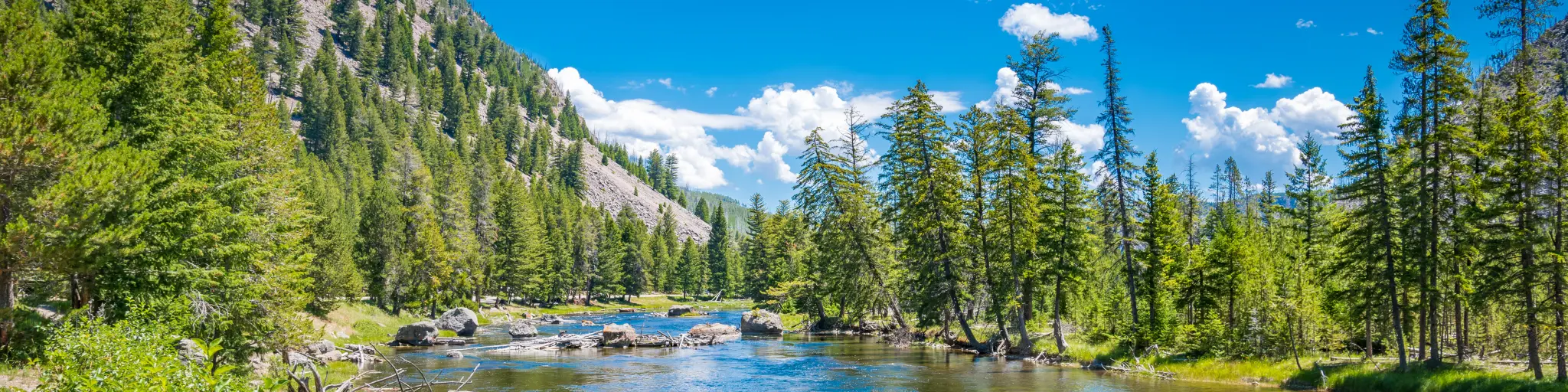
Road Trip From Denver To Yellowstone National Park

The drive from Denver to Yellowstone's South Entrance is 510 miles - about 8 hours on the road. It's the most popular road trip destination from Denver for a reason.
There are two ways to get to Yellowstone. The western route through Jackson and Grand Teton National Park drops you into some of the best scenery in the country before you even reach Yellowstone. The eastern route through Casper and Cody takes about as long, but arrives at the East Entrance bypassing Grand Teton National Park.
If you're doing a round trip, take the western route up and the eastern route back. You get two completely different drives through Wyoming instead of retracing the same road, and Grand Teton on the way in sets the bar impossibly high before Yellowstone somehow clears it.
Give yourself at least four full days exploring on top of the two driving days - Yellowstone is enormous and trying to rush it is a waste of the drive. It's about 510 miles from Denver to Yellowstone's South Entrance but you'll want to stop overnight in Jackson before you get there. Leave Denver in the morning and you can be in Jackson by late afternoon.
🚙 EXPLORE MORE: The Best Road Trips From Denver
Read this before you leave Denver
❄️ The Seasonal Shutdown
Nearly all interior roads in Yellowstone close to regular cars by early November and don't reopen until late April or May. This isn't a suggestion - rangers physically gate the roads and the roads are buried under snow. If you turn up in March expecting to drive the Grand Loop, you'll be turned away.
Check the NPS road status page before booking anything. The exact opening dates shift every year depending on snowfall, and some roads like Dunraven Pass can stay closed well into June.
🚗 The Entrance Queue
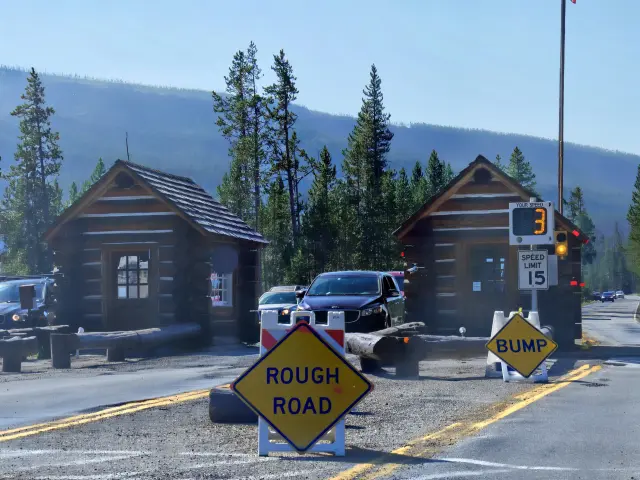
The South and West entrances are the busiest in the park. In July and August, the West Entrance can back up for over an hour between 8 and 11 AM. The South Entrance through Grand Teton coming from Jackson is better but still very busy in the morning rush.
The East entrance via Cody is a maximum of a 5-minute wait, but you're also an hour further away from all the main sites, so the queue cancels itself out on time.
You don't need a reservation to enter Yellowstone - just buy your entrance pass online before you go. Entry to Yellowstone and Grand Teton is $35 per car, so you'll have to spend $70.
America The Beautiful gives you unlimited access to all national parks for a year at just $80 and covers a car with 4 passengers, so you might as well get that.
📵 The Wyoming Gap
This trip crosses empty Wyoming twice, on two different roads. On the way up, fill up in Rawlins - it's about 120 miles from there to Lander with nothing dependable in between, and no phone signal for most of it.
If you come home the eastern way, do the same in Cody on your way back - the road through Thermopolis and across to Casper is long and mostly empty too.
Download offline maps before you leave Denver and carry extra water and a portable charger. A breakdown out here is annoying enough without your phone being dead too.
How many days do you need?
6 days is the sweet spot for this trip. You could rush it in four, but Yellowstone is so big that cutting a day means skipping entire sections of the park.
If you have a week, spend the extra days going deeper into Yellowstone - there's always another trail, another geyser basin, another valley.
Here's what each day looks like:
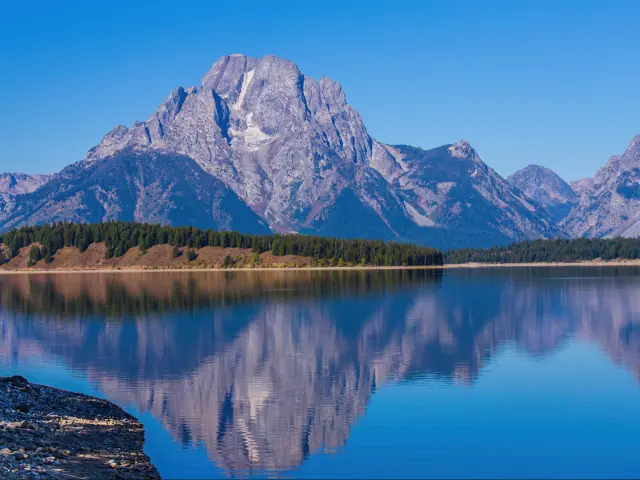
Day 1: Denver to Jackson
🚗 510 miles ⏱️ 8 hours, 30 minutes
Leave Denver in the morning and drive straight to Jackson, Wyoming. It's over 8 hours on the road, so don't plan for anything else - just get there, check in, and find somewhere good for dinner. Jackson is the perfect base for seeing Grand Teton the next day.
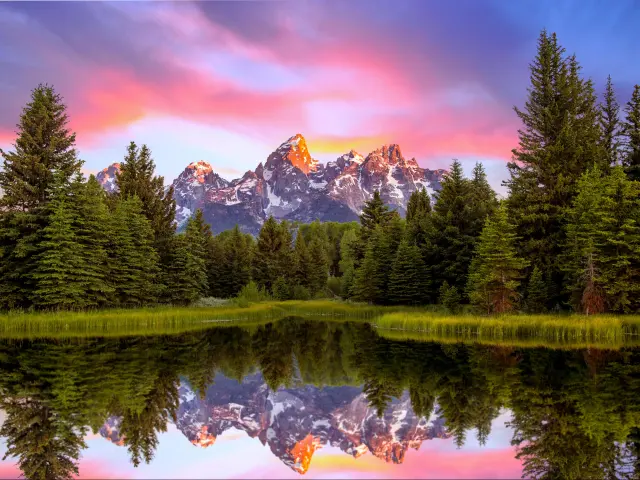
Day 2: Grand Teton National Park
Spend the full day in Grand Teton National Park. Most people drive straight past it and regret it. The Teton Range is the most dramatic mountain skyline in America and you're right there.
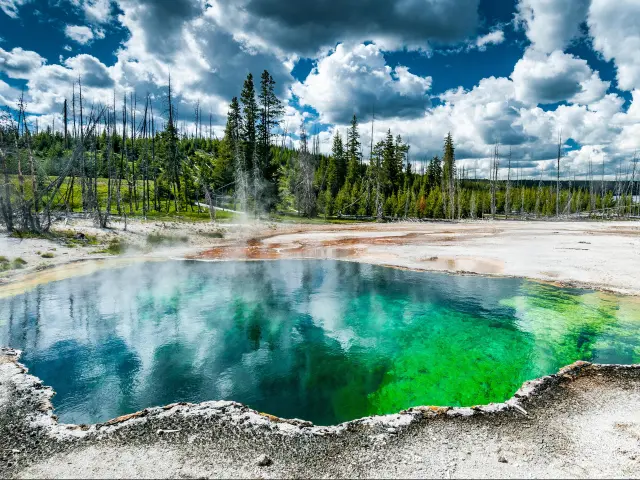
Day 3: Southern Yellowstone
Enter through the South Entrance and spend the day in the Lower Loop. Old Faithful, Grand Prismatic Spring, and the other geyser basins are all in this section. Check into your hotel in West Yellowstone or a lodge inside the park at the end of the day.
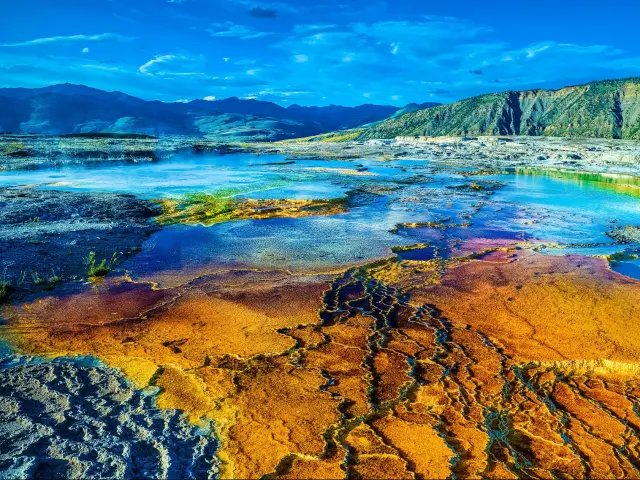
Day 4: North Yellowstone
Drive the Upper Loop. The Grand Canyon of the Yellowstone, Mammoth Hot Springs, and Tower Fall are up here. The canyon alone is worth the day - the scale of it catches everyone off guard.
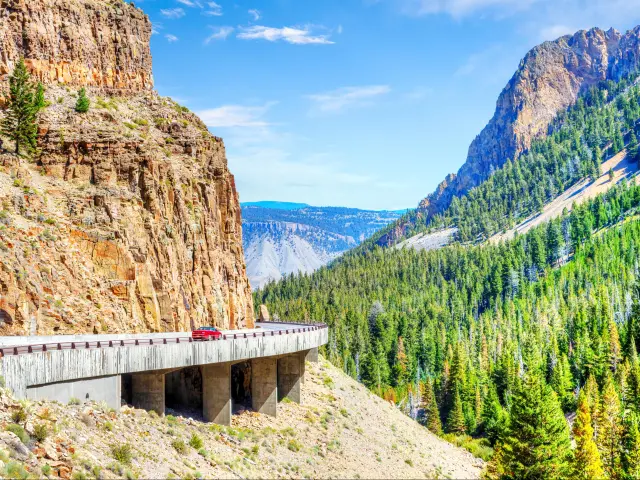
Day 5: Lamar Valley and Wildlife
Head to the northeast corner of the park early in the morning. Lamar Valley is the best place in the lower 48 to see wolves, and dawn is when they're active. Bison herds, elk, and grizzlies are common along this stretch. On the way back from Lamar Valley, the stretch of Grand Loop Road through Golden Gate Canyon is spectacular.
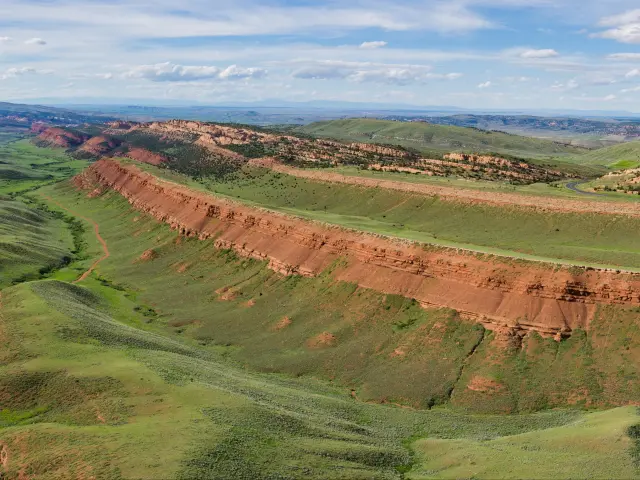
Day 6: Drive back
🚗 640 miles ⏱️ 11 hours
Head back to Denver. The drive home is longer than the way up - you're starting from the far side of the park rather than Jackson.
Retracing your route through Jackson takes around 10 hours. Exiting via the East Entrance instead and looping through Cody and Casper is an hour longer, but you get a completely different drive through Wyoming. Leave early.
Only have a long weekend? Leave Denver early, drive straight through to Yellowstone via the South Entrance, and check into your in-park lodge on day one.
Spend two full days on the Lower and Upper Loops, then drive home on day four. You'll miss Lamar Valley and the Tetons but you'll hit the major highlights.
Where to stay
This trip needs two bases - Jackson for the first two nights while you explore Grand Teton, then three nights in West Yellowstone or inside the park for the Yellowstone days.
Jackson: You only need two nights here - before and after exploring Grand Teton on day 2. If you want to treat yourself, Hotel Jackson is where I stayed. It's expensive, but for two nights at the start of a big trip, the luxurious rooms, service and super central location made it worth it.
Jackson has excellent restaurants so make the most of your two evenings here - the food options get significantly more limited once you're inside the park.
West Yellowstone: This is where I'd stay for the Yellowstone days. It's right at the West Entrance, the closest gate to Old Faithful and the geyser basins - you can be at Old Faithful within 45 minutes of leaving your hotel.
The trade-off is the entrance queue. The West Entrance is the busiest gate in the park, and in July and August the morning queue between 8 and 11 AM can stretch for over an hour. Leave before 7 AM and you'll drive straight through. You can always get your breakfast inside the park if you set off early.
The Bar n Ranch is very close to the park entrance and is a hotel that oozes charm (unlike most in West Yellowstone). If you've seen the Yellowstone series, you might do a double take as it looks just like the Dutton ranch.
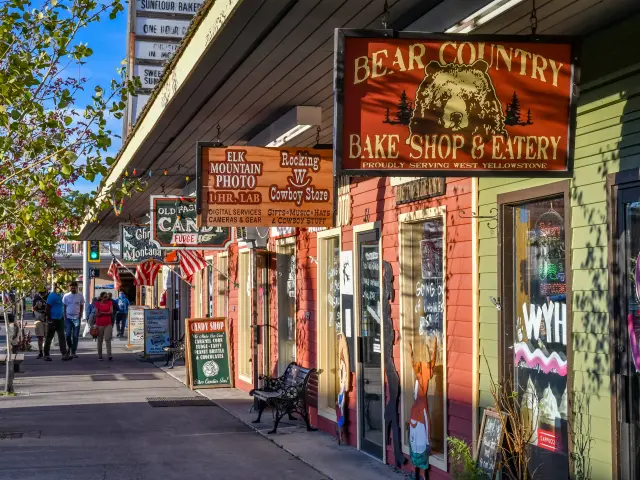
Inside Yellowstone National Park: If you want to be inside the park at dawn and dusk without the daily drive in, you can book a lodge - but set your expectations accordingly. Every lodge is basic - limited WiFi, no air conditioning, and prices that feel steep for what you get. You're paying for the location, not the room.
Lake Yellowstone Hotel is the nicest option - it overlooks the lake and the rooms are more elegant than anything else in the park. Old Faithful Inn is the iconic alternative - spectacular building, smaller and more rustic rooms.
The real reason to stay inside the park is being there when the day visitors have left. That access is worth more than WiFi. Book through yellowstonenationalparklodges.com - in-park lodging fills up 6 to 12 months ahead for summer.
Don't base yourself in Jackson for exploring Yellowstone. It's 1.5 hours to the South Entrance and at least another hour from there to the main attractions. You'll spend your days driving instead of exploring.
The route from Denver
If you want to plan your daily drives inside Yellowstone, or customize your drive through Wyoming, you can build your own version of the route in the Planner.
Head north out of Denver on I-25 to Fort Collins, then take US-287 northwest to Laramie. This first stretch is easy - well-maintained highway, and you'll be past Laramie in about three hours.
From Laramie, stay on I-80 west to Rawlins. Fill up here - this is the last reliable town for a while. Google Maps might tell you to keep going on I-80 to Rock Springs, but I prefer the more scenic route north on US-287 through Lander.
The road climbs out of the desert and into the foothills of the Wind River Range, and the scenery improves with every mile.
Lander is a good place to stop for fuel and food. It's a small outdoor town that feels like a proper place rather than a highway rest stop.
From Lander, stay on US-287 through Dubois and over Togwotee Pass. This is the best section of the whole drive - the road climbs through dense forest, crosses the Continental Divide, and then drops into the Jackson valley with the full Teton Range suddenly filling your windshield.
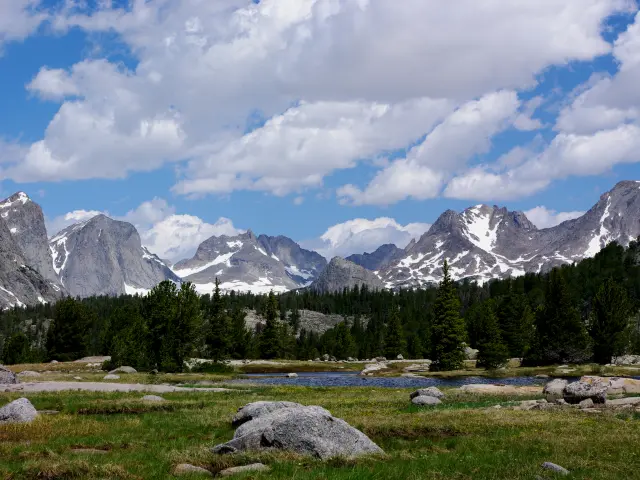
After hours of Wyoming grassland, that first view of the Tetons hits hard.
Jackson is small and very walkable. Stock up on groceries here so you can pack lunches and have snacks for your park days in Grand Teton and Yellowstone.
The Granite Canyon Entrance to Grand Teton National Park is 20 minutes from Jackson, right next to the Jackson Hole ski resort, so you won't have to go far on day 2.
Yellowstone's South Entrance is 1 hour 20 minutes away, and remember it gets busy. So try to get there as early as you can on day 3, then spend the day in the park before either driving to West Yellowstone or your park lodge.
Grand Teton and Jackson
Most people treat Grand Teton as something they drive through on the way to Yellowstone. That's a mistake - this park deserves a full day.
The Teton Range is the most abrupt mountain skyline in America. There are no foothills. The valley floor sits at about 6,500 feet and the peaks shoot straight up to nearly 14,000 feet right in front of you. On a clear morning, the reflection in Jenny Lake is one of the most photographed views in any national park.
Start your day at the Granite Canyon Entrance and head north along Teton Park Road. Stop at Jenny Lake - the short boat shuttle across the lake cuts out 2 miles of flat hiking around the perimeter of the lake and drops you at the base of Inspiration Point and Hidden Falls. Both are short, easy trails with massive payoff views.
If you're a stronger hiker, the Cascade Canyon trail from Jenny Lake heads deep into the mountains along a creek with wildflowers and the chance of moose sightings. Budget at least 3-4 hours for the full out-and-back depending on how far you want to go (or spend the whole day hiking by continuing along the 18-mile Lake Solitude trail).
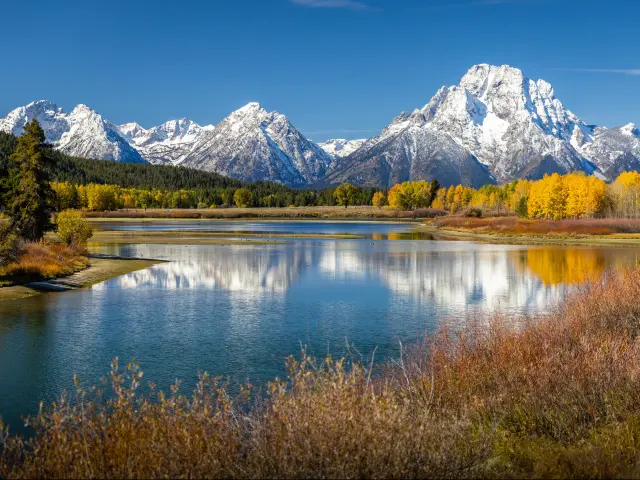
Get back to your car and continue north to Signal Mountain. The drive up to the summit takes about 10 minutes and gives you a 360-degree panoramic view of the entire valley, the Tetons, and Jackson Lake.
Jackson is a great place to spend an evening after a day sightseeing in the Tetons. The town square with the elk antler arches is a bit touristy but fun, and the restaurants are genuinely good. Make sure you take advantage - once you're in Yellowstone, food options drop off in quantity and quality.
Don't try to see Grand Teton and go to Yellowstone on the same day. You'll rush both and enjoy neither. Give the Tetons a full day and enter Yellowstone fresh the next morning.
If you want some more inspiration on Jackson and the Tetons, check out my Denver to Jackson Hole guide.
Yellowstone National Park
This article isn't a Yellowstone guide - you could spend a week reading about the park and still not cover everything. What you need to know for planning this road trip is how the park works logistically so you don't waste your days driving in circles.
Yellowstone is built around one road - the Grand Loop. It's shaped like a figure 8 and connects almost everything worth seeing. The full loop takes around 5 hours to drive without stopping, but you will stop — and you should. A lot.
So you can't see the whole park in one day if you're there to actually see and experience it. Split it into the Lower Loop and Upper Loop and do one per day.
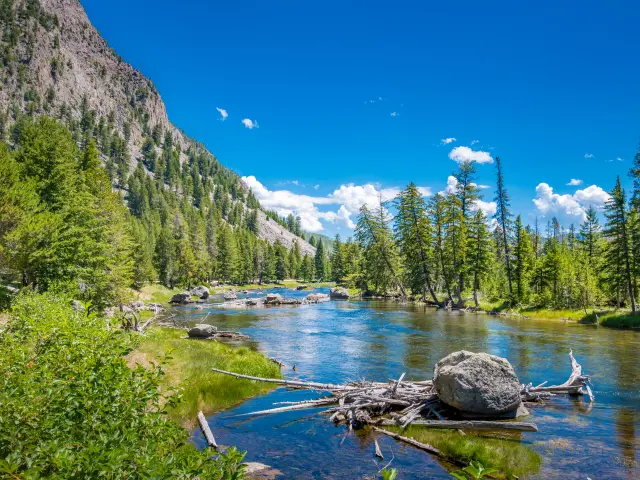
The Lower Loop covers the geyser basins. Old Faithful, Grand Prismatic Spring, Fountain Paint Pots, and the West Thumb Geyser Basin are all on this section.
Old Faithful erupts roughly every 90 minutes - check the predicted eruption time at the visitor center when you arrive and plan around it, or wait while having your lunch nearby.
Grand Prismatic is best viewed from the overlook trail above, not from the boardwalk at basin level where you'll mostly see steam.
The Upper Loop has the Grand Canyon of the Yellowstone, Mammoth Hot Springs, and Tower Fall. The canyon is the one place you must see - the scale genuinely catches everyone off guard.
You can walk up to both the Upper and Lower Falls viewpoints. Artist Point is the famous one - the view down the canyon with the falls at the end is the photo you'll see on every travel brochure.
Then drive round to the north rim and do the Brink of the Lower Falls trail. It's a steep half mile down to a platform right where the river goes over the edge, and you really feel the rush of the water when you get there.
The only way out is back up the same path, so make sure you've got the climb in you before you head down. If you'd rather skip it, Lookout Point is on the same road and gives you the falls from above.
Mammoth Hot Springs is worth a stop and it'll only take you around 30-45 minutes.
Lamar Valley is in the northeast corner, connecting the Upper Loop and the Northeast Entrance. This is the best place in the lower 48 to see wolves - but realistically your only chance is at dawn when they're hunting. On the day you drive the Upper Loop, get here first thing and then cover everything else.
Bring binoculars or a spotting scope. Bison herds are everywhere along the valley road. If you only have two days in the park and need to cut something, don't cut this - it's the most memorable part of Yellowstone for most visitors.
A few practical things that save time and frustration:
- The roads inside Yellowstone are slow. Speed limits are 45 mph at best, dropping to 25 in developed areas, and bison jams can stop traffic for 30 minutes with no warning. Allow buffer time for everything in your plan.
- Fuel is available at Canyon, Old Faithful, Fishing Bridge, Grant Village, Mammoth, and Tower Junction. Prices are steep but you don't have a choice - fill up your tank when you can so you don't run low at the worst time.
- Cell signal is essentially non-existent inside the park. Download offline maps and don't rely on your phone for navigation. The paper map they give you at the entrance gate is genuinely useful - keep it on the passenger seat.
Getting home
If you're leaving from West Yellowstone, the simplest return is to reverse the route - head south through Jackson, then Lander, Rawlins, Laramie, and I-25 back to Denver. It's the same road and it should take you around 10 hours to drive.
For a different drive back, exit Yellowstone through the East Entrance and head to Cody. The road from Yellowstone to Cody follows the North Fork of the Shoshone River through one of the most spectacular canyon drives in Wyoming - it's worth the detour just for this stretch.
From Cody, head south through Thermopolis and on to Casper, then pick up I-25 south back to Denver. You can see the full route on the map above. It's roughly the same total driving time and you'll see the Bighorn Basin and high desert instead of retracing the grasslands.
Either way, it's a full day of driving. Leave in the morning and don't plan for anything else.
If you're still deciding where to go, I have some great alternative road trip ideas in my full Denver road trip guide - including shorter drives like Mount Rushmore & Badlands or Rocky Mountain National Park if you don't have 6 days to spare.
Sasha Yanshin – Founder & Lead Driver
Sasha Yanshin has spent the last 15+ years mapping and driving thousands of miles across Europe and the US. As the Founder and Lead Driver of Lazytrips, he brings an analytical approach to road-tripping, sharing meticulously tested routes, realistic drive times, and the hard-earned logistical reality of the open road.
Read full bio