
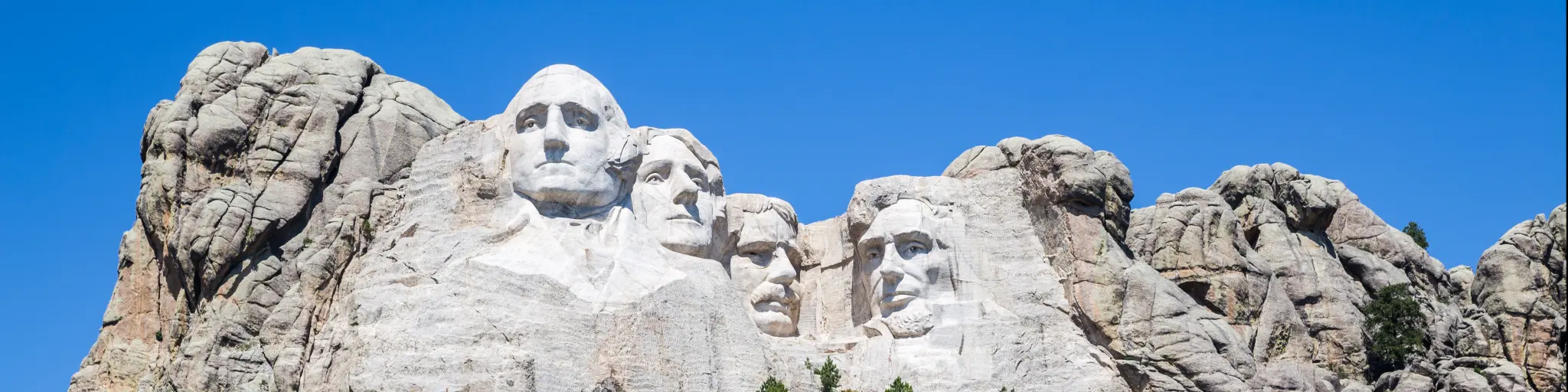
Road Trip from Denver to Mount Rushmore & Badlands

The road trip from Denver to Mount Rushmore is unusual because it breaks the first rule of road trips - the driving bit is the boring part and the main event is what awaits you when you get to South Dakota.
Mount Rushmore, Custer State Park, Crazy Horse Memorial, and Wind Cave are all must-see stops within the Black Hills, and the Badlands sit about an hour east. Base yourself in Rapid City or Custer and everything worth seeing is within 90 minutes.
That makes your planning simple. Drive straight up without wasting time on detours, and give yourself three or four days to explore properly once you arrive. You'll see more and have a better time than if you try to break up the drive itself into a multi-day trek.
The route is 365 miles - about 6 hours on the road. Leave Denver in the morning, stop at Mount Rushmore in mid-afternoon, and you'll be checking into a hotel in Rapid City well in time for dinner.
🚙 EXPLORE MORE: The Best Road Trips From Denver
Read this before you leave Denver
📵 The Wyoming Dead Zone
Once you leave Cheyenne heading north on US-85, you hit stretches of 60+ miles with no towns, no gas stations, and no phone signal.
Download offline maps before you set off, and download your music and videos for the kids - streaming won't be an option.
Make sure you have enough gas to get you from Lusk to Hot Springs - it's 100 miles without a single gas station along the way.
🏍️ The Sturgis Problem
The Sturgis Motorcycle Rally runs for the first two weeks of August when half a million bikers descend on the Black Hills.
Every hotel within 100 miles is fully booked and charging triple rates. Roads around Rapid City and through the national parks are packed with never-ending lines of Harleys.
If you're not going for the event, avoid the first half of August or, if you must, book accommodation a year in advance.
🌡️ The Temperature Whiplash
You leave Denver in cool mountain air and arrive at the Badlands where chalky rock reflects the sun back at you and ground temperatures hit 150°F.
There's virtually no shade in the park. People underestimate this constantly - Badlands in July at midday is HOT. Pack more water than you think you need, bring a hat, and plan your Badlands hikes for early morning.
How many days do you need?
Four days is the sweet spot for this trip. A day less and you're having to choose between seeing the Badlands or driving through the Black Hills.
If you stay longer, you can take more time on the trails, but there isn't a fifth day's worth of new places to see.
Here's what each day looks like:
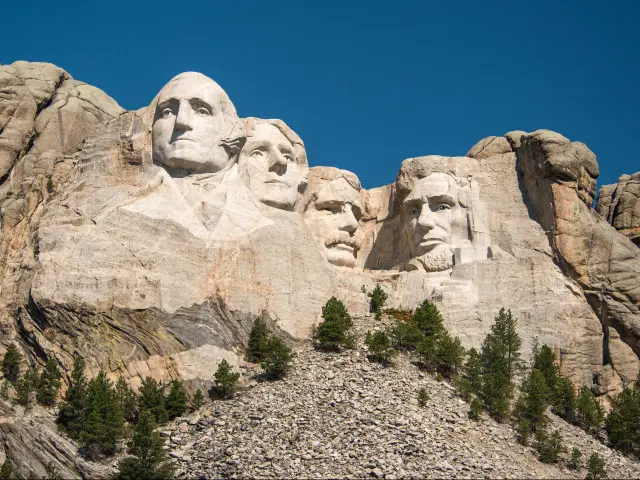
Day 1: Denver to Mount Rushmore
Leave Denver in the morning and drive straight up to South Dakota. Stop at Mount Rushmore in the mid-afternoon, walk the Presidential Trail, and check into your hotel in Rapid City in time for dinner.
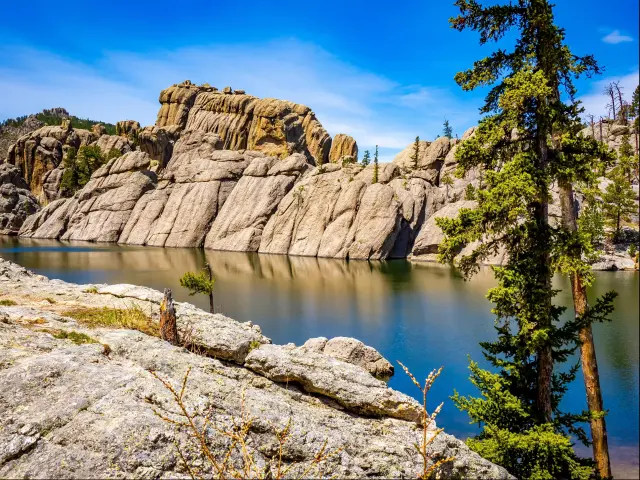
Day 2: Custer & the Scenic Drives
Spend the day in the Black Hills. Drive the Wildlife Loop Road in Custer State Park early when the bison are out and about, then tackle Needles Highway and Iron Mountain Road while the light is good.
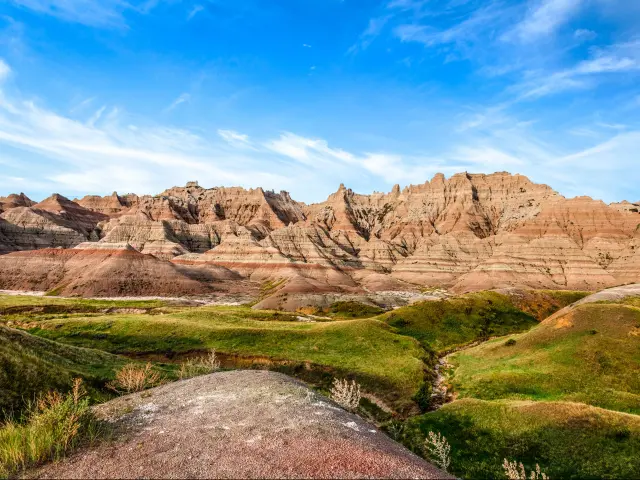
Day 3: The Badlands
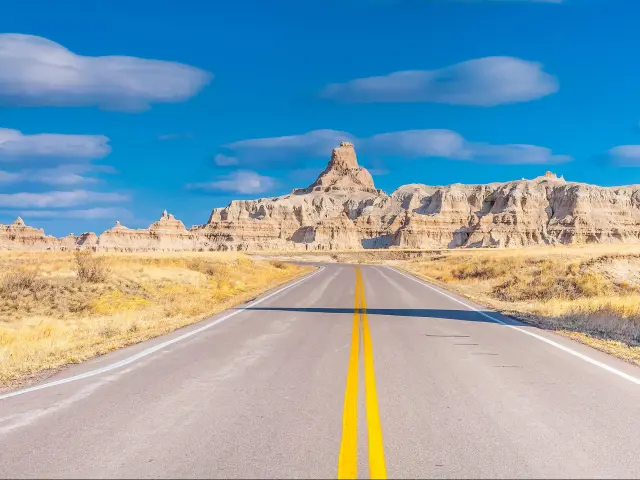
Drive east from Rapid City and spend the full day in the Badlands. Get there as early as you can - the landscape at dawn is spectacular and by early afternoon in summer it'll get too hot for hiking.
Day 4: Your Pick & Drive Home
Choose between exploring more of the Black Hills (Crazy Horse Memorial, Wind Cave) or head back to the Badlands first thing. Head back to Denver after lunch. The drive home is the same 6 hours whichever route you take.
If you only have a weekend, stop and see Mount Rushmore on arrival day and give the Badlands a full morning on day two before driving home in the afternoon.
The other option is to drive up on Friday evening and accept a late arrival, but then get a full day at the Badlands on Saturday and then cherry-pick a few scenic spots in the Black Hills on Sunday morning before going back.
Where to stay?
Most people default to Rapid City for this trip, but I'd stay in Custer.
It's a small western town right at the entrance to the Black Hills with good places to eat and a lot more character than Rapid City.
The EO Bungalows are right in the middle of Custer - you get more space than a standard hotel room, a small kitchen for early breakfasts and packing lunches, and you can park after a long day out and walk to dinner in five minutes.
The trade-off is that the Badlands are about 40 minutes further from Custer than from Rapid City so that drive is almost 2 hours each way. But then you win that time back on your day in the Black Hills and on the drive up from Denver.
If you'd rather be closer to the Badlands, or just prefer having a bigger town around you, the Hyatt Place in downtown Rapid City is the pick.
Breakfast is good, rooms are exactly what you'd expect, and you're a short walk from plenty of restaurants - which matters a lot after a full day on the road.
The route from Denver
You can customize this route and add your own stops in the Planner.
Take I-25 north out of Denver. It's about 90 minutes of easy interstate driving to Cheyenne.
Stop in Cheyenne for fuel and food - this is the last proper town before a long empty stretch. Worth a quick wander if you haven't been.
North of Cheyenne the road empties out fast. It's about two hours of dead-straight highway through rolling grassland with no towns, no rest stops, and no phone signal. Fill up in Lusk before heading north on US-18 - it's the last gas station for 100 miles.
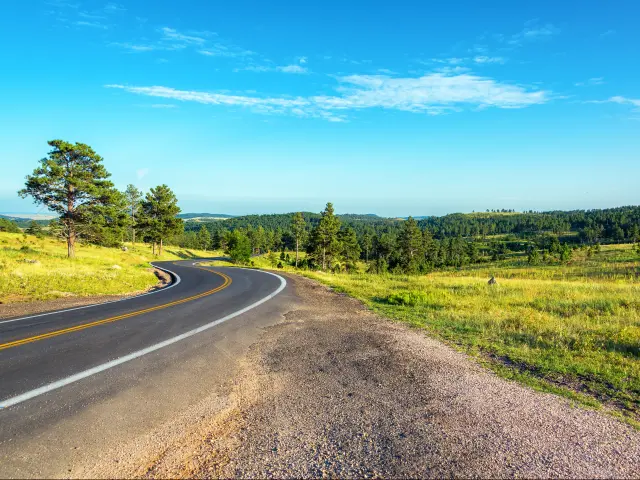
From Lusk, the landscape changes as you head west into South Dakota. Flat grassland gives way to pine-covered ridges rising from the plains.
Just before Hot Springs, take the left turn onto Highway 89 north to Custer.
If you miss it or have time for a stop, Hot Springs is only 12 miles further. The Mammoth Site there is a legitimate active dig where dozens of mammoth skeletons sit exactly where they were found - you walk on elevated platforms directly above the bones. Looks like a tourist trap from outside but it isn't. Thirty minutes well spent.
From Custer, keep following US-385 north. Mount Rushmore is signposted with increasingly big signs so you won't miss it.
Mount Rushmore
Mount Rushmore is a 45-minute stop. That's not a criticism - it's just the reality of how long you'll actually spend there.
You park in the main garage (there's a fee, but it covers 12 months so keep the receipt), walk along the Avenue of Flags, and arrive at the viewing terrace.
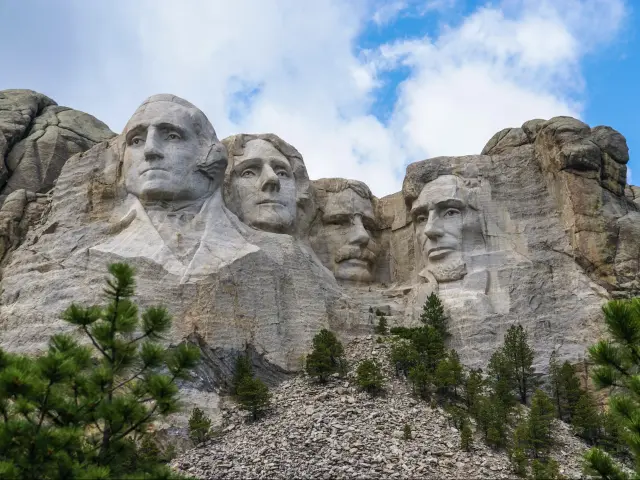
Washington, Jefferson, Roosevelt, and Lincoln are right there in front of you, carved into the granite. It's impressive and worth seeing, but there's no trail to the base, no way to get closer, and the terrace is where most people spend their time.
The Presidential Trail is a half-mile paved loop that takes you slightly closer and gives you different angles. Plan for about 30 minutes if you stop to read the panels. The Sculptor's Studio at the end has the original models and tools used to carve the faces - worth taking a look.
The one downside of arriving in the afternoon is the light. The faces are carved into a southeast-facing cliff, so they're lit best before noon. By afternoon they're partly in shadow and the tour buses start turning up later on.
If you want fewer crowds and better photos, go before 9 AM when the car park is empty and the crowds haven't turned up yet.
But one reason to come in the evening is the evening lighting ceremony.
The faces are illuminated from below and there's a short ranger program. It runs from late May through mid-September and starts at sunset - around 8 to 8:30 PM.
The best strategy is to stop at Mount Rushmore on the way in from Denver. You'll arrive mid-afternoon, the light is still decent, and you can see everything before checking into your hotel (or check in first if you're staying in Custer). That frees up your full days for the Badlands and Custer, which need much more time.
The Badlands
The Badlands is the part of this trip you'll think about most after you get home.
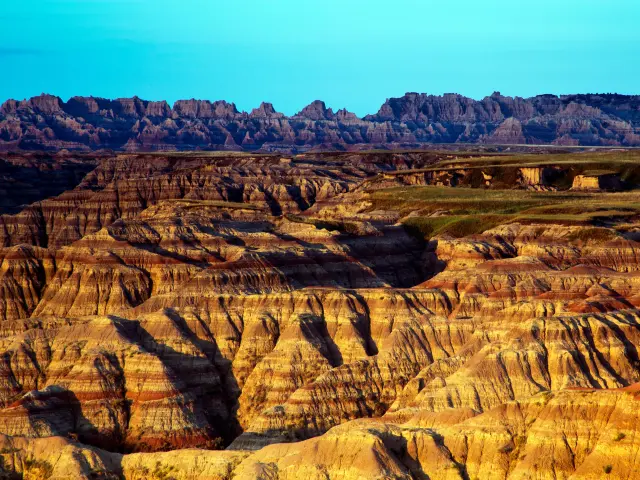
Nothing else in the lower 48 looks like this. Millions of years of erosion have carved the prairie into jagged spires, layered canyons, and rock formations that shift color depending on the light. Gray, pink, orange, yellow, all in the same view. Photos don't come close to capturing the scale.
Drive in from the northeast entrance off I-90 at Exit 131, just east of Wall. This puts you at the start of the Badlands Loop Road - a 30-mile drive along the rim with pullouts and scenic overlooks every half mile.
Each one gives you a completely different view and most have short trails that let you walk right to the edge.
Do Notch Trail first. It's only 1.5 miles round trip but it includes a wooden ladder bolted into the canyon wall and a narrow ledge walk to a notch that opens up to a panoramic view of the White River Valley.
Try to get there as early as possible - by mid-morning the ladder section backs up with groups, and by noon the exposed rock is radiating heat that makes the short hike unpleasant. Getting there by 8 AM means an early start, but you can finish early too.
The Ben Reifel Visitor Center near the Interior entrance has air conditioning, clean bathrooms, and a decent 15-minute film about the park's geology. Perfect for midday when the heat drives you off the trails.
If your vehicle has decent clearance, drive the Sage Creek Rim Road on the western side. It's unpaved but well-maintained in dry conditions and takes you through open wilderness where bison herds graze right next to the road. Don't take a low-clearance rental sedan out here after rain - it turns to mud fast.
The Yellow Mounds Overlook near the south side of the loop is easy to drive straight past, but stop for it. The exposed rock layers create bands of mustard yellow and deep red that look almost painted on. It's one of the most photographed spots in the park for good reason.
Leave Rapid City or Custer before sunrise, do the trails early, drive the loop, and head back by lunchtime. In summer the afternoon heat makes the park borderline unbearable - you won't want to get out of the car, which defeats the point.
Custer State Park and the scenic drives
Most guides either skip Custer State Park or mention it as an afterthought. That's a mistake - the best driving roads in the Black Hills are here, and this is where you're most likely to see wildlife up close.
Three drives are worth doing. Each one is completely different.
Wildlife Loop Road is 18 miles through open grassland where roughly 1,300 bison roam freely. Drive it early morning or late afternoon - the animals are resting in the middle of the day and you'll see nothing.
In the right conditions you'll have bison crossing the road in front of your car, wild burros walking up to your window, and pronghorn grazing on the hillsides.
Don't feed the burros no matter how much they beg - once they realize you've got food, your car will become a target. If you only have time for one drive in Custer, this is the one.
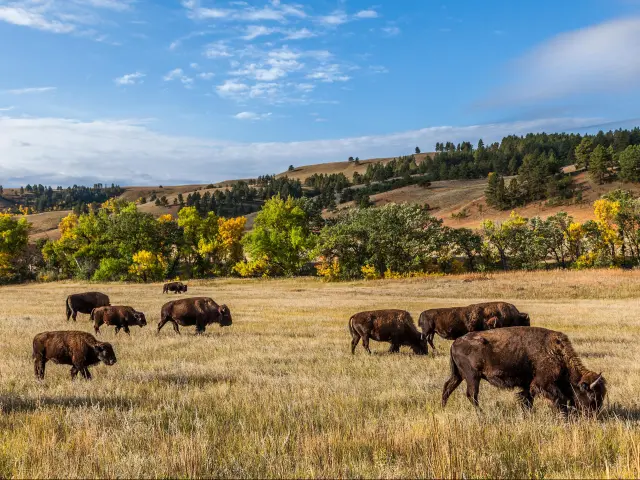
Needles Highway is 14 miles of narrow, winding road threading through towering granite spires and tunnels carved through solid rock.
One of the tunnels is so tight that larger SUVs and RVs physically cannot fit. If you're in a full-size pickup or anything with a roof rack, check the clearance signs before committing - there's nowhere to turn around once you're on the road.
The drive is spectacular but genuinely stressful if you're not comfortable with sharp switchbacks and sheer drops.
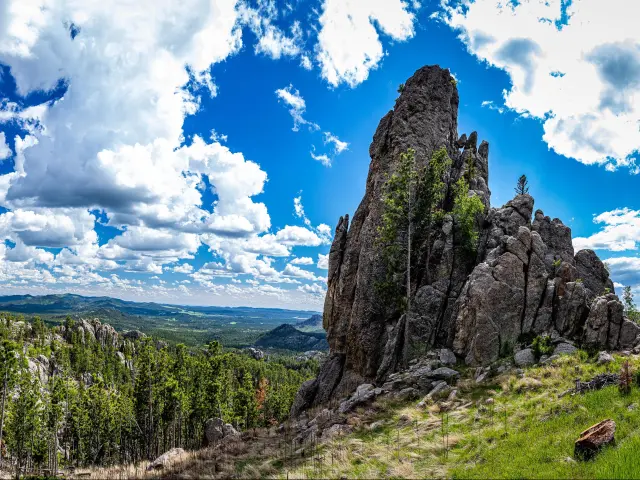
Iron Mountain Road connects Custer State Park to Mount Rushmore and has the famous pigtail bridges - corkscrew wooden bridges that loop over themselves to gain elevation.
Three tunnels along the road are positioned to perfectly frame Mount Rushmore in the distance as you drive through them. Drive it in the Mount Rushmore direction so the views are in front of you, not behind.
If you have a full day for Custer, do Wildlife Loop at dawn, Needles Highway mid-morning, and Iron Mountain Road in the afternoon heading toward or back from Mount Rushmore. That sequence works with the light and avoids the busiest times on each road.
Other stops worth your time
Crazy Horse Memorial is the most polarizing stop in the Black Hills. A 563-foot sculpture of the Lakota warrior Crazy Horse is being carved into an entire mountain, intended as a counterpart to Mount Rushmore representing Native American heritage.
Construction started in 1948. The face was completed in 1998. The rest of the mountain is still mostly uncarved and you're viewing it from a considerable distance.
The museum complex at the base is actually the best part - a strong collection of Native American art and artifacts with detailed exhibits about the project. Worth an hour. Manage your expectations about the sculpture itself and you'll enjoy the visit.
Wind Cave National Park sits directly below Custer State Park and has one of the longest cave systems in the world.
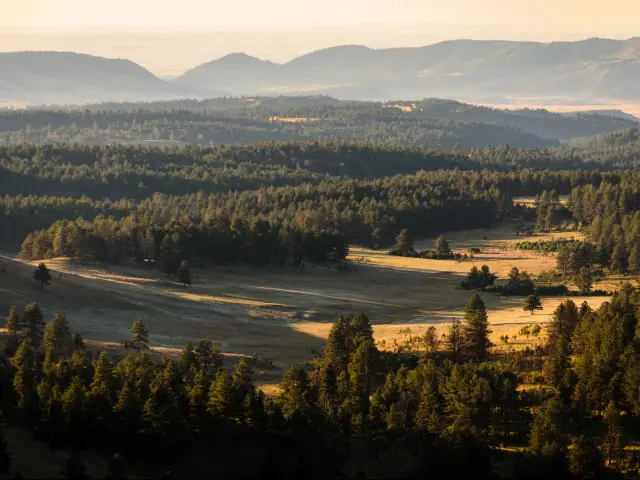
The ranger-guided tours take you underground for about an hour and the cave stays at a constant 53°F year-round. That makes it a perfect afternoon activity on a hot day when you've already done your outdoor hiking.
The Natural Entrance Tour is the most popular and doesn't involve any climbing or tight squeezes.
Deadwood is a gold rush town that reinvented itself around gambling and Wild West tourism. The main street is lined with casinos and saloons. I'm not into gambling, but the old town itself is worth a wander for the history alone.
The Adams Museum is legitimately good if you're interested in frontier history. Wild Bill Hickok and Calamity Jane are buried at Mount Moriah Cemetery up the hill. Worth a few hours wandering, maybe a lunch stop if you have time, but I wouldn't prioritize this over seeing nature in the Black Hills.
Wall Drug is impossible to avoid - you'll see hundreds of signs for it on the drive in from every direction. It's a massive tourist attraction and gift shop complex 10 minutes north of the Badlands that started as a pharmacy offering free ice water in the 1930s.
The five-cent coffee is still going (and still costs 5 cents). Stop for the novelty, use the bathroom, buy a bumper sticker if you want one. Don't plan your day around it.
Getting home
The fastest return from the Black Hills is the same route in reverse.
Alternatively, if you're coming back from the Badlands, you can head directly south along Highways 73 and 61 before taking the I-76 into Denver. It's hundreds of miles of empty grasslands, but you're not retracing the same route.
Don't try to drive home after a full day of hiking. It's 6+ hours and the Nebraska/Wyoming stretches are monotonous enough to be actually dangerous when you're tired. Leave by noon or stay one more night.
If you're still deciding where to go, I have a lot of alternative road trip ideas in my full Denver road trip guide — including shorter drives like Colorado Springs and Breckenridge if you don't have 4 days to spare.
Sasha Yanshin – Founder & Lead Driver
Sasha Yanshin has spent the last 15+ years mapping and driving thousands of miles across Europe and the US. As the Founder and Lead Driver of Lazytrips, he brings an analytical approach to road-tripping, sharing meticulously tested routes, realistic drive times, and the hard-earned logistical reality of the open road.
Read full bio