
Road Trip from Denver to Monument Valley

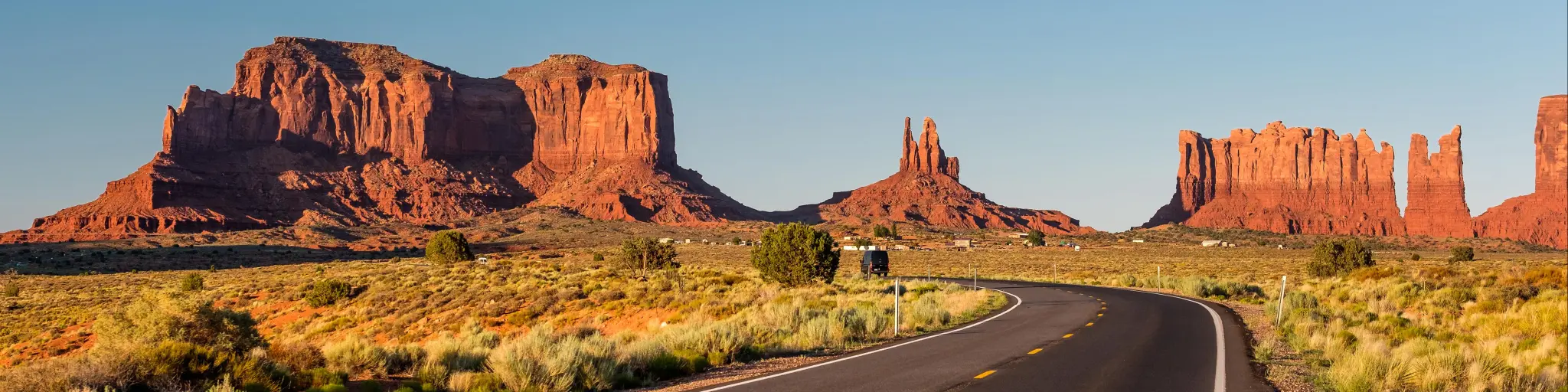
Monument Valley is 500 miles from Denver - the red sandstone buttes rising out of the desert floor in the Navajo Nation are one of the most recognizable landscapes in the world.
There are two ways to get there: the western route through canyon country in about 8 hours, or the southern route over Wolf Creek Pass and past Mesa Verde in about 9.
By far the best option is to take one route out and the other back - the two routes could not be more different.
Five days gives you two full days in Monument Valley and a stop at Mesa Verde on the way back through Durango.
Read this before driving out of Denver
⛰️ Check the Passes Before You Leave
Both routes cross mountain passes above 10,000 feet - the Eisenhower Tunnel on I-70 sits at 11,000 feet on the western route, Wolf Creek Pass hits 10,850 on the southern route. In summer they're fine. Outside of summer, check CDOT road conditions before you leave - snow and closures happen well into May.
🎟️ Book Mesa Verde Before You Go
The cliff dwelling tours at Mesa Verde need tickets booked through recreation.gov in advance, and they sell out in summer. Book your tour slot before you leave Denver, so it's sorted and you don't have to think about it on the way.
🍺 The Navajo Nation Is Dry
Alcohol isn't just unavailable on the Navajo Nation - it's prohibited. You can't buy it, and it's illegal to bring it onto the reservation, so The View Hotel has no bar and serves no beer or wine with dinner. Plan on Monument Valley being an alcohol-free stretch of the trip.
How many days do you need?
5 days is perfect for the Denver to Monument Valley road trip.
The drive from Denver is 8 hours, so you'll spend day 1 on the road and arrive in time for sunset if you leave early enough.
You then get two full days in Monument Valley to do the loop drive, a guided tour, the Wildcat Trail, and two sunsets on the balcony.
You head over to Mesa Verde on day 4 and stop in Durango on the way back. Then day 5 is the long leg of the return drive back to Denver.
You could shorten the trip to 4 days and drive back in one go, but that's a lot of driving for 2 days of sightseeing, and Mesa Verde and Durango are right on the way, so you'd be missing out.
Moab is not worth stopping at unless you want to spend a few extra days exploring Arches and Canyonlands.
Day 1: Drive to Monument Valley
🚗 500 miles ⏱️ 8 hours
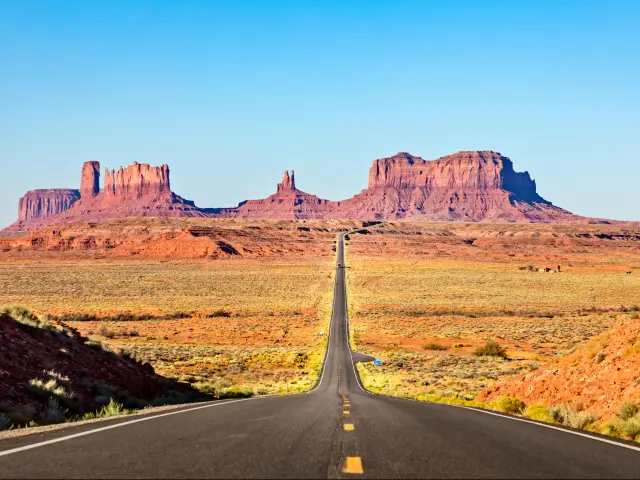
Leave Denver early for the fastest route to Monument Valley through Glenwood Canyon and US-191 past Moab. With stops for food and fuel, you should still get to Monument Valley in time to catch the sunset.
Day 2: Monument Valley
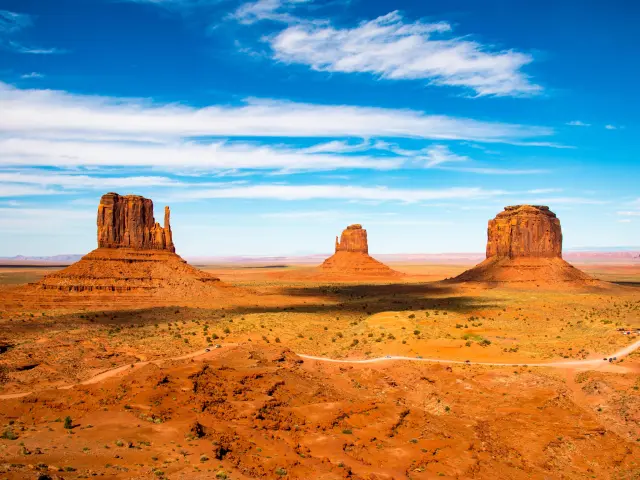
Get up in time to have your coffee as the sun rises behind the buttes. Spend the morning slowly driving the 17-mile loop - it's perfect for getting out and walking around at stops before the heat sets in. Then go on a Navajo-guided backcountry tour in the afternoon - the guides take you to places you can't reach on your own.
Day 3: Monument Valley
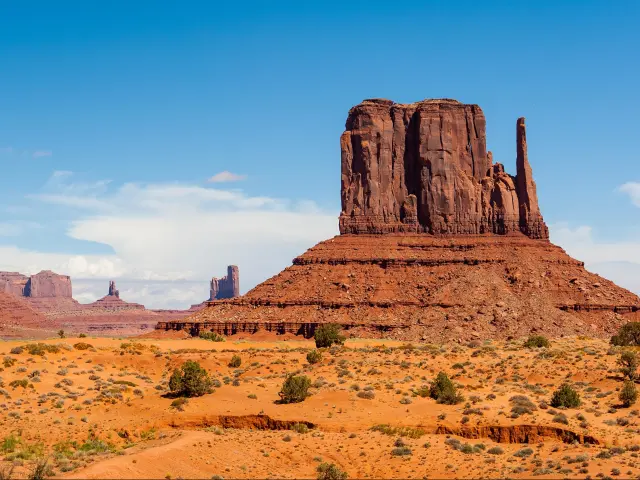
Walk the Wildcat Trail in the morning - it's 3.2 miles around West Mitten Butte that gives you a completely different perspective from ground level. In the afternoon, you have a choice: go on a horseback tour, take a deeper tour into the backcountry, visit Goosenecks State Park, or take a tour down to San Juan River from Mexican Hat.
Day 4: Mesa Verde & Durango
🚗 210 miles ⏱️ 4 hours, 40 minutes
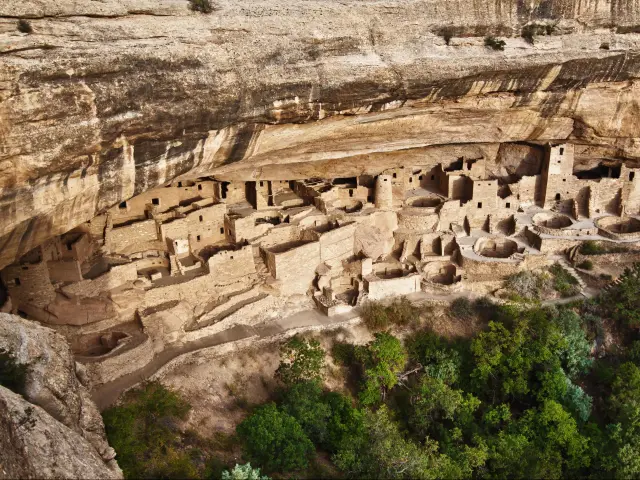
Leave Monument Valley in the morning and drive the 3 hours to Mesa Verde. Spend the afternoon doing a cliff dwelling tour at Cliff Palace or Balcony House, then it's a 90-minute drive back down to the park entrance and on to Durango for dinner and a night in the mountains.
Day 5: Drive Home
🚗 340 miles ⏱️ 6 hours
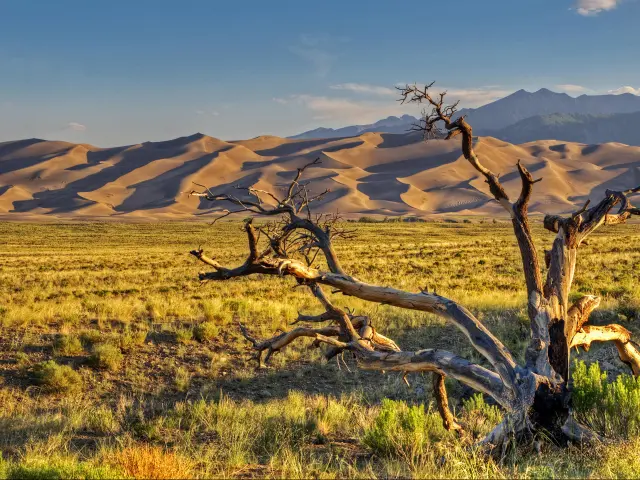
Drive back to Denver - route crosses over Wolf Creek Pass and up through the Rockies. Lots of mountain scenery and views of the Great Sand Dunes at the other end of the San Luis Valley.
Where to stay
You only need to book two hotels for this trip - three nights in Monument Valley and one night in Durango on the way back.
Monument Valley
In Monument Valley, you want to stay at The View Hotel. It's the only hotel inside the tribal park, and every room faces the Mittens (the buttes you're coming for).
You can watch the sunrise over the buttes from your bed with a coffee in hand, which is the very reason to make the long drive here.
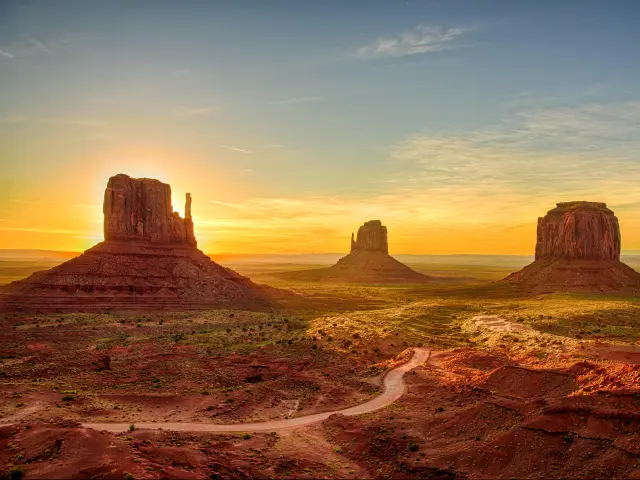
The rooms themselves are relatively ordinary and the amenities are not all that - the restaurant reviews are pretty average.
The thing is - none of that actually matters because you're paying for the location and the view and it's worth every dollar.
The View sells out well before peak season (especially in August), so plan ahead and book early to lock in your dates. You can only book The View directly on their website.
If you can't get a room at The View, Goulding's Lodge is 5 miles further back from the buttes and is the best Plan B.
Remember that Monument Valley is within the Navajo Nation, so there's no bar and no wine with dinner.
Durango
In Durango, the place to stay is the Strater Hotel, right on Main Avenue.
It's an 1887 Victorian landmark that you'll take pictures of, even if you don't stay there. Rooms have antique walnut furniture and period wallpaper - it's history that you can sleep in.
You can easily park up and walk to restaurants on Main Avenue, which is a win after a long day - don't choose to stay further out and have to drive into town for dinner.
The Diamond Belle Saloon is downstairs - it's firmly on the touristy side of things, but it's worth a drink even if ragtime piano isn't normally your thing - you might appreciate a cold one after 3 dry nights in the Navajo Nation.
The saloon runs live music into the evening, and the front rooms above Main Avenue hear it - part of the atmosphere for some, but worth knowing if you're a light sleeper (ask the hotel in advance for a room at the back if you want to make sure).
Which route should you take?
There are two good routes from Denver to Monument Valley - both are about 500 miles and there's only an hour difference in driving time.
| Route | Distance | Driving Time |
|---|---|---|
| Moab Route Utah desert and canyons | 500 miles | 8 hours |
| Durango Route Rockies & Great Sand Dunes view | 495 miles | 9 hours |
The best option is to take the Moab route on the way to Monument Valley and come back via Durango.
The Moab route is faster and the last stretch on US-163 - where the buttes slowly appear on the desert horizon ahead of you - is one of the best arrivals on any American road trip.
The Durango route gives you a stop in Mesa Verde on the way back and avoids retracing your steps, so it makes for a much more interesting return leg. If you have more time, you also get more options for stops and detours.
If you want to customize your route or add more stops, you can use the itinerary from this article as a starting point in the Planner
The Moab Route
From Denver, you head west on I-70, going straight up into the mountains, through the Eisenhower Tunnel, past the ski resorts, and over Vail Pass.
The best part of the road happens when you reach Glenwood Springs: for 12 miles the interstate runs along the Colorado River through Glenwood Canyon, hemmed in by canyon walls, and there's a fair few places to pull in and stop if you want to take a scenic break.
Grand Junction is the halfway mark to Monument Valley and the natural place to stop for lunch - it's the last city before you reach the Utah desert.
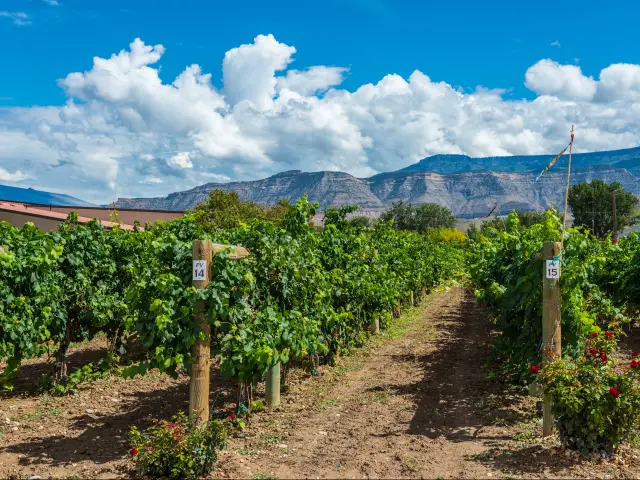
In August and September, the fruit stands in Palisade just before town are the perfect place to grab a snack for the rest of the drive. The locals take their peaches very seriously.
After you cross into Utah, the landscape turns to red rock and you'll begin feeling the heat in the summer.
The fastest route is to exit onto US-191 at Crescent Junction, but you can come off the interstate 4 junctions earlier at Cisco (junction 214) and take Highway 128 to Moab instead - it'll add 15 minutes, but the road is amazing and follows the canyon carved out by the Colorado River.
There's no fuel for 50 miles after Moab and gas stations are spread out after that, so fill up in Moab and you'll be fine for the rest of the drive.
Heading south from Moab, you won't see much for two and a half hours. Wilson Arch is about 25 minutes down the road - you can't miss it as it's right beside the highway - worth a 5-minute stop to stretch your legs.
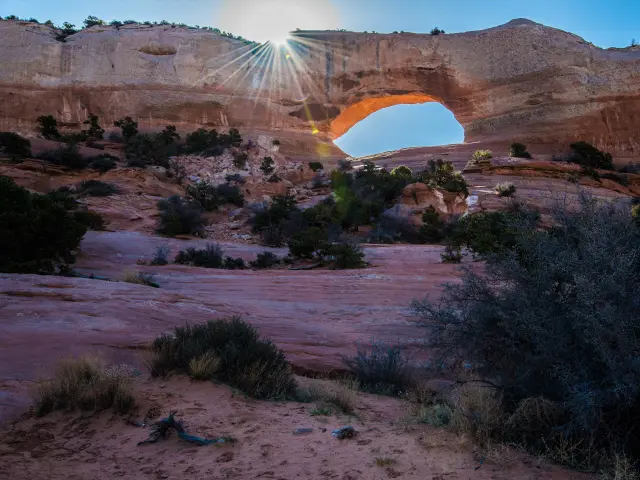
The arrival is the magical bit at the end of a long drive. As you go past Mexican Hat on US-163, you enter the Navajo Nation and you'll see the buttes rise on the horizon straight ahead.
Leave Denver early and even with stops along the way, you'll drive this stretch seeing the valley ahead lit up by the evening light.
What to do in Monument Valley
The park is run by the Navajo Nation, not the National Park Service, so your national parks pass won't get you in - entry is $10 per person plus $15 per vehicle, paid at the gate.
With two full days here, you don't have to rush - there's plenty of time to do the loop drive, a couple of guided tours and the Wildcat Trail.
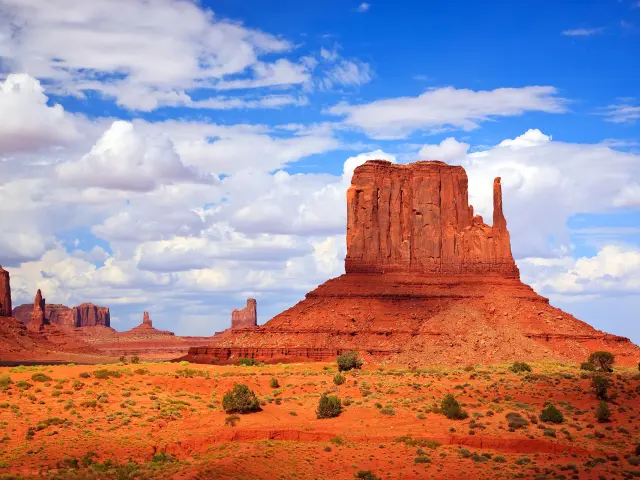
The loop drive
The 17-mile loop is the heart of the visit - the drive down onto the valley floor starts right from the hotel.
It's not a long way to drive and the idea is to take it at your own pace, stopping at the viewpoints as you go. You can spend a whole morning doing it and going early means you avoid the afternoon heat and get out before the day trippers arrive.
The track is unpaved and genuinely rough. If you have anything with decent ground clearance, that's the car to bring on this trip - low cars can bottom out, and rain makes the sand a real problem.
If you're in a regular car and the road looks bad, don't force it: the guided tours drive the same valley floor and beyond, so you won't miss the views.
One of the iconic stops is John Ford's Point - the overlook from every Western you've ever seen where a rock sticks out above the valley floor.
There's usually a Navajo horseman posing against the backdrop - remember that the custom is to pay a small tip for the photo.
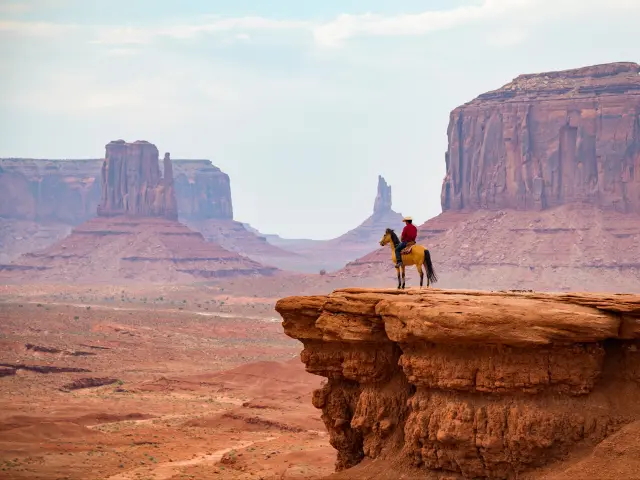
North Window, near the far end of the loop, might actually be an even better view but with a bit less fanfare.
Navajo-guided tours
Everything beyond the loop - Mystery Valley, the arches, the petroglyphs - is backcountry that you can only enter with a Navajo guide.
Look up the Navajo tour options on the official website - there is a lot of variety and they will take you to different parts of the park.
A Mystery Valley drive and a sunrise or stargazing tour will show you completely different places. Prices start around $85 per person.
Most tours run in open-sided 4x4s or adapted vans - it's fantastic in good weather, but can feel gritty if a spring wind decides to blow sand in your face.
There are horseback versions too if you're the adventurous type and would rather move through the valley at 1880s pace.
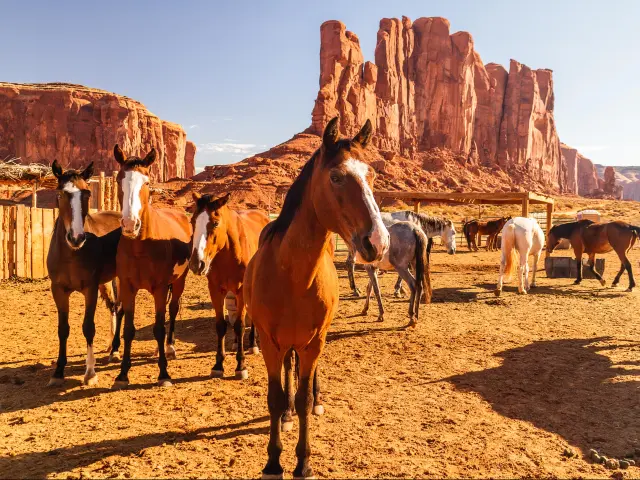
Tours are generally available at short notice, but book before you leave Denver, so you're not scrambling and trying to figure out your plan on the day.
Remember that unlike the rest of Arizona, the Navajo Nation does daylight saving like Colorado, so your tour times are on Denver time.
Wildcat Trail
The Wildcat Trail is the only trail in Monument Valley you can hike without a guide - it's a 3.2-mile loop around West Mitten Butte, starting straight from the hotel.
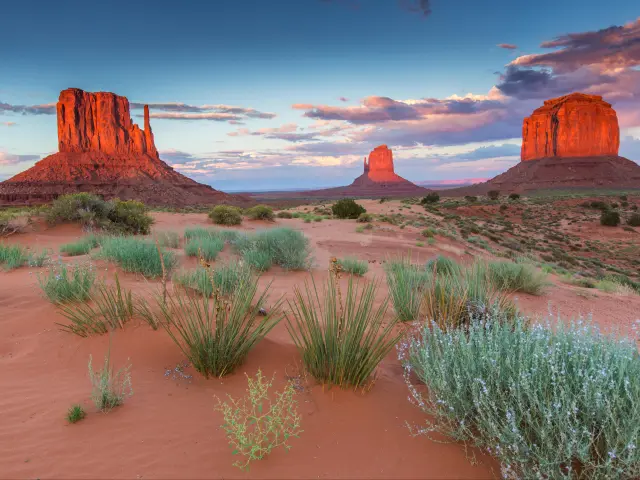
It's flat, sandy in parts, and takes about two hours. The driving loop gets you close, but this gets you closer. The view straight up won't look good in a photo, but it's very impressive when you're standing there.
It gets hot later in the day in the summer and you'll feel the heat of the sand on your ankles, so go in the morning and bring a lot of water.
The Forrest Gump shot
The stretch of US-163 around mile marker 13 as you approach Monument Valley from the north is where the highway runs dead straight towards the buttes.
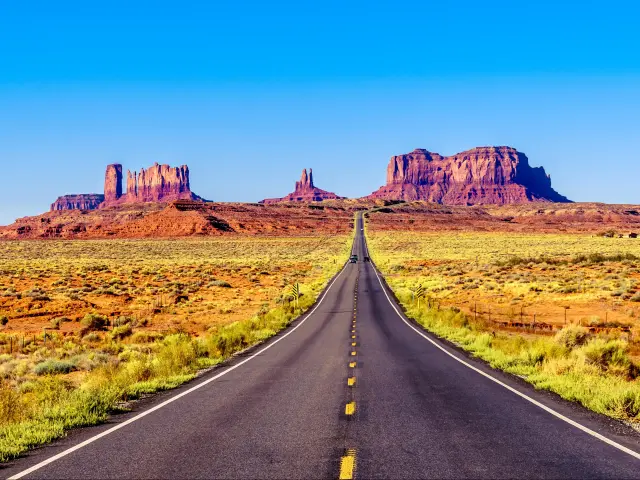
It's the most photographed road in America, and it's the famous spot where Forrest Gump stopped running after 3 years, 2 months, 14 days, and 16 hours and said "I'm pretty tired. I think I'll go home now".
Weirdly enough, Forrest turned around and walked back towards the buttes instead of carrying on home to Alabama - I guess even he couldn't resist an extra night in Monument Valley.
Remember the road is a live highway with traffic moving at 65mph, so watch out for approaching cars when you're taking your photos.
Route back via Durango
I showed this route further up to compare it to the Moab route, but here you're driving it the other way, so this whole section will focus on the reverse route from Monument Valley back to Denver.
Mesa Verde
You can drive to Mesa Verde back the way you came, through Mexican Hat and Bluff, or head the other way and drive south to Kayenta before following US-160 all the way to Cortez.
The scenery is very similar and there's less than 10 minutes difference between them, so you can choose between one last glimpse at Monument Valley from your rear view mirror or taking a slightly slower route you haven't driven yet.
It's about 3 hours to Mesa Verde, and you'll pass the turnoff for Four Corners Monument on the slower route - it's a plaque in a parking lot and a queue for a photo of you on all fours in four states.
If that sounds fun, it's a quick detour, but you can easily skip it if you don't want to get your knees dirty.
You'll want to spend more time than you might think in Mesa Verde - the cliff dwellings are at the top of a winding 21-mile park road, and it takes a good 45 minutes from the entrance before you get to the main part.
You can see the cliff dwellings from the overlooks, but you need to go on a tour to get inside them - standing in an 800-year-old room beats looking at one from across the canyon.
Cliff Palace is the best known in the park as it's the biggest cliff dwelling in North America.
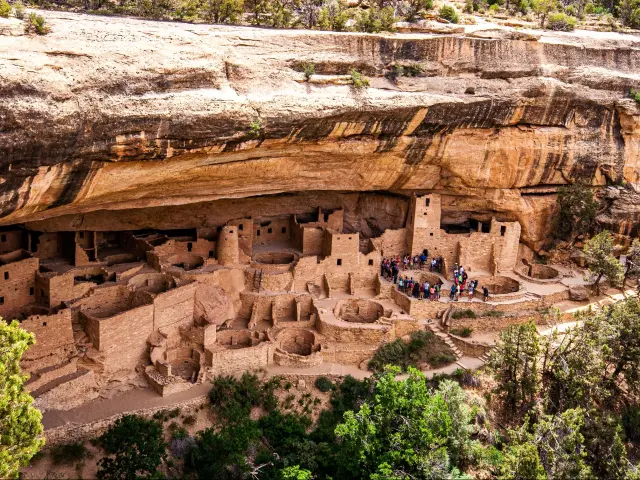
Balcony House is another popular site - it's a 32-foot ladder and a crawl through a tunnel to get in. You don't have to be an athlete to visit, but it's a steep climb and you will need a bit of agility for the crawl inside.
You will need to book these tours on the official Mesa Verde tour page. Tickets are released 14 days before your tour date at 8:00 AM Mountain Time, so get them booked before you leave Denver.
You can easily do two of these on the same day or three at a push if you plan it right.
The sites are not too far from each other, but the Cliff Palace Loop and Mesa Top Loop are two separate one-way loops, so you may need to drive 20-30 minutes from one site to another.
If you'd rather spend more time in the park, the road trip from Denver to Mesa Verde covers it properly.
Last tours finish around 4:00 PM and it's about 40 minutes from the park to Durango, so you will be back in time for a walk around town and a pre-dinner drink on Main Avenue after checking in.
Durango to Denver
The last day is the long drive back to Denver - 6 hours across the Rockies.
An hour out of Durango, Pagosa Springs is the place to stop and grab a coffee and a pastry. It's a hot springs town, and you'll smell the sulphur before you see the steam.
After Pagosa Springs, US-160 climbs to 10,850 feet to cross the Continental Divide over Wolf Creek Pass - the climb is steep, the views are huge, and the Arizona desert feels a very long way behind.
On the other side of the pass, the road drops into the San Luis Valley - a completely flat basin the size of a small state with mountains on every side.
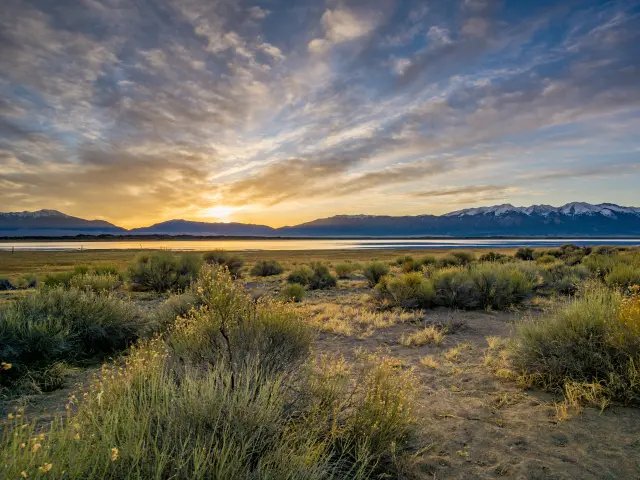
I've never seen anything like it - you can be driving an hour and a half in a straight line and the mountains on the other side of the valley don't seem to get any closer.
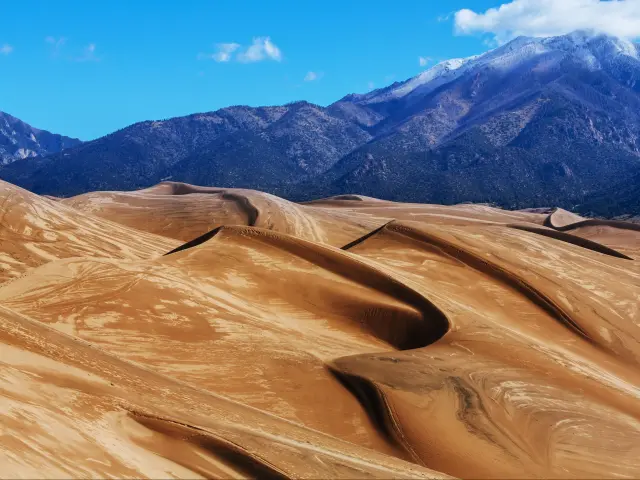
You'll see the Great Sand Dunes sitting in a gap in the mountains straight ahead of you as you enter the valley.
As you cross the valley, you'll be turning left onto US-285 at Gunbarrel Station - a small green gas station on your left - and it takes you all the way back to Denver.
If you want lunch first, skip the turn and carry on into Center.
There's really not much in town in the way of restaurants, but a small food truck called La Pache Pache, parked outside the Family Dollar, does some of the best tacos I've ever had.
A lot of the farm workers around here are Mexican, and the evening queue at the truck says it all. Get your tacos, then double back to the turn.
From there, US-285 climbs over Poncha Pass, runs up through South Park, and drops over Kenosha Pass for the final descent towards Denver.
Worth a detour
If you have half a day spare while staying in Monument Valley, Goosenecks State Park is well worth a stop.
Goosenecks is 30 minutes back up the way you came, just past Mexican Hat. The San Juan River does three full hairpin loops a thousand feet below the overlook, and you can see all of them from one spot.
There's a $5 per-vehicle fee and you only need 20 minutes for the sightseeing stop.
You can also book a Navajo-guided tour down to the San Juan River - the tour length ranges from a few hours to 4-day rafting trips down the river.
Just up the road is Valley of the Gods - a 17-mile dirt loop through buttes and mesas that feels like a private Monument Valley with no crowds, no fees and no tour buses.
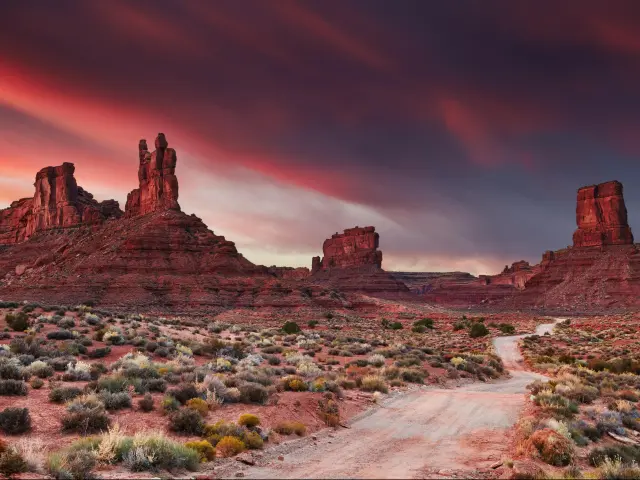
The road is fine for a normal car when it's dry, but it gets very dusty and can run a bit rough, so an SUV or a truck is a good choice. The loop takes about an hour and a half to drive.
The Moki Dugway is a gravel road that starts in the same place as the West Entrance to the Valley of the Gods.
It climbs 1,200 feet up the side of a cliff in a series of switchbacks and you should be able to do it easily in most cars although RVs and towing vehicles are not allowed.
Muley Point at the top has one of the best views in the Southwest, and almost nobody goes.
When you're driving back to Denver, you'll see the Great Sand Dunes from US-160 as you cross the San Luis Valley.
A stop here means an hour extra driving and you'll want at least 2 hours to go on the dunes, so it's not a short stop.
It's worth it if you don't mind arriving back later in the evening and if you have kids, you really can't not go.
If you can add a day
An extra night in Durango lets you go on the Durango & Silverton Narrow Gauge Railroad - a steam train that runs a full day through the San Juan Mountains to Silverton and back.
It's one of the best things you can do in Colorado - trains set off in the morning and it's 3.5 hours each way plus 2 hours in Silverton, so you need a full day to do it.
There are two trains out every morning, so availability is decent, but in the summer, it can sometimes sell out, so don't leave booking it until the last minute.
If you want more detail on Durango, the surrounding area, and the train, read my detailed guide to the road trip from Denver to Durango.
Moab is tricky because while it's right on the way to Monument Valley, you would really need a minimum of 3 extra nights to make it worth staying.
3 nights gets you 2 full days there - one for Arches and one for Canyonlands National Park. Ideally you'd stay even longer to see The Needles and Dead Horse Point State Park, but that will extend the whole trip to a total of 10 days.
The Denver to Moab road trip covers both national parks and where to stay in much more detail.
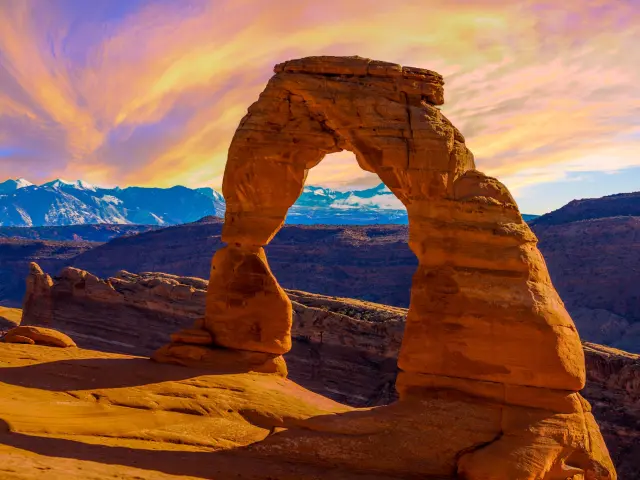
Monument Valley pairs well with other trips - the Grand Canyon is only 3 hours further down the road if you want to keep going, and Telluride is a great way to explore the San Juan Mountains.
If you want more ideas, my Denver road trip guide has a lot of them - including big destinations like Yellowstone, Las Vegas, and Mount Rushmore.
Sasha Yanshin – Founder & Lead Driver
Sasha Yanshin has spent the last 15+ years mapping and driving thousands of miles across Europe and the US. As the Founder and Lead Driver of Lazytrips, he brings an analytical approach to road-tripping, sharing meticulously tested routes, realistic drive times, and the hard-earned logistical reality of the open road.
Read full bio